In this guide
- Rheem 18kW Tankless Water Heater
- EcoSmart ECO 11 Tankless Water Heater
- GE 10-Gallon Plug-In Electric Water Heater
- Orbek 18kW Tankless Water Heater
- Bosch Tronic 3000 T Mini Tank
- Buying Guide
- Assess Your Hot-Water Demand
- Power, Wiring, and Service Capacity
- Space, Installation, and Versatility
- Temperature Control and Safety Features
- Efficiency, Operating Costs, and Longevity
- Warranty and Support
- Which Style Should You Choose?
- Tips For A Smooth Buy
Choosing an electric water heater that fits your home, budget, and daily hot-water needs can be challenging. This guide focuses on five well-regarded options that balance performance, energy efficiency, and space savings. Whether you live in a small apartment or manage a larger household, the right model can reduce energy waste while delivering reliable hot water on demand. Below, you’ll find concise product summaries, a quick compatibility table, and a practical buying guide to help you compare features and make an informed choice.
| Product | Brand | Key Features |
|---|---|---|
| Rheem 18kW Tankless Electric Water Heater | Rheem | On-demand hot water, LED thermostat, self-modulating, copper elements, 4.4 GPM |
| EcoSmart ECO 11 Tankless Water Heater | EcoSmart | Self-modulating, compact, 1-degree temperature accuracy, 90% smaller than traditional tanks |
| GE 10-Gallon Plug-In Electric Water Heater | GE | 100% 120V plug-in, compact under-sink design, 8-year warranty |
| Orbek 18kW Tankless Water Heater | Orbek | 4.17 GPM, dual-pole 240V, high efficiency, 2 x 40A breakers required |
| Bosch Tronic 3000 T Mini Tank | Bosch | 2.5-gallon point-of-use, 98% efficiency, 120V plug-in |
Rheem 18kW Tankless Water Heater
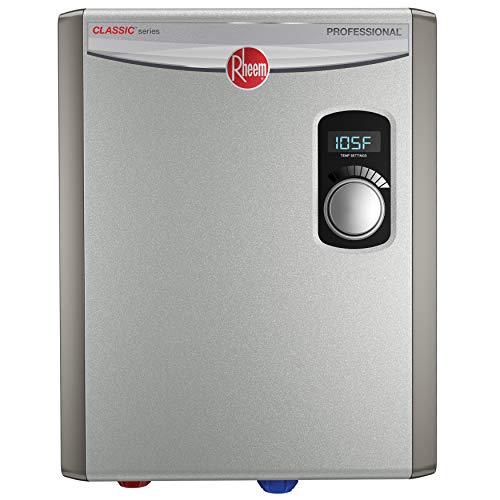
The Rheem 18kW 240V Tankless Electric Water Heater combines robust control with on-demand heating. It features an external digital thermostat with an LED display that offers ±1 degree accuracy, enabling precise temperature management. Its self-modulating technology adjusts power output to match hot-water demand, helping minimize energy waste. Built with durable copper immersion heating elements, the unit is designed for field serviceability, making routine maintenance more straightforward. With a maximum flow rate up to 4.4 GPM, this model is well-suited for households needing reliable hot water at one or two fixtures simultaneously, depending on incoming water temperature and usage patterns.
Installation considerations include ensuring your residential electrical panel can handle 240V and ample space for ventilation and service access. This Rheem model is best used where a compact, wall-mounted unit is appropriate, typically serving one bathroom or a small kitchenette setup. While it delivers consistent on-demand hot water, actual performance depends on climate and water chemistry. The unit’s modular design and serviceability can reduce downtime and support ease of future upgrades.
EcoSmart ECO 11 Tankless Water Heater

The EcoSmart ECO 11 is designed for efficiency and space savings. It operates with patented self-modulating technology, which adjusts energy use based on real-time hot-water demand. The unit provides endless on-demand hot water and maintains water temperature within about 1 degree of the selected setting, delivering consistent comfort. At 54 A draw, it is compact enough to mount on a wall or place at the point of use. The 11 x 11.5-inch footprint keeps installation neat, and the 90% smaller size compared with traditional tank heaters translates into major space savings in tight homes or apartments.
In practical terms, EcoSmart emphasizes energy efficiency by heating water only when needed, reducing standby losses typical of tank systems. Its 99% thermal efficiency rate underscores a low operating cost profile. Installation options include wall mounting or point-of-use placement, which can simplify retrofits. For households with modest hot-water needs, this model can provide reliable, space-conscious performance while still delivering consistent temperature control, especially in moderate climates.
GE 10-Gallon Plug-In Electric Water Heater
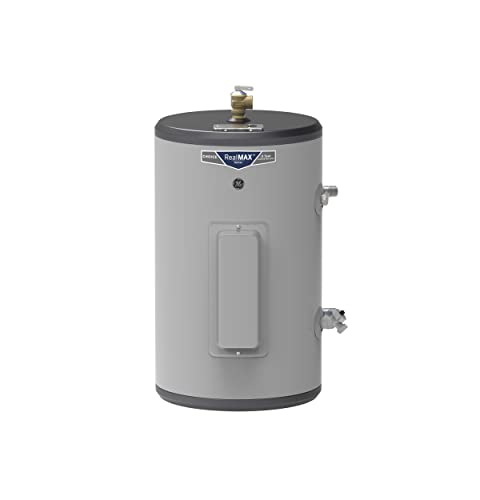
The GE 10-Gallon plug-in electric water heater is designed for simple, flexible placement in kitchens, bathrooms, RVs, cabins, or small laundry areas. It uses a standard 3/4-inch NPT connection and runs off a 120-volt supply, making it an approachable option for quick upgrades or retrofits where a full-size tank would be impractical. The compact design helps conserve space while still delivering reliable hot water for low- to moderate-demand applications. GE backs this model with an 8-year limited warranty on the tank and parts and a 1-year labor warranty, which adds long-term peace of mind.
Because it operates on 120V, electrical framing is simpler than many high-capacity tankless systems, though the wattage is lower than 240V options, limiting simultaneous usage. This makes the GE 10-gallon unit ideal for point-of-use hot water near a sink or small media area. It’s a practical choice for households seeking quick installation and a compact, dependable backup heater, especially where space constraints or limited electrical service are a factor.
Orbek 18kW Tankless Water Heater
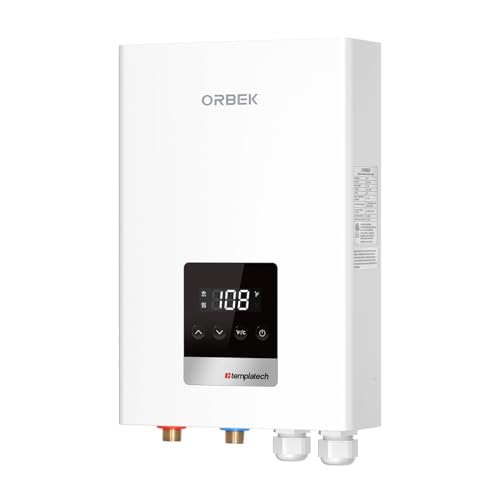
The Orbek 18kW electric tankless water heater is designed for households needing robust on-demand hot water across multiple fixtures. It requires two 240V/40A two-pole breakers and a 200-amp service recommendation to accommodate the electrical load. With up to 4.17 GPM, it supports simultaneous use at two to three points of use, depending on incoming water temperature. The unit uses a digital temperature display with 1-degree increments for precise control. Its energy-efficient design prioritizes on-demand heating to minimize wasted energy, aligning with modern efficiency goals.
Proper installation is critical for Orbek models. Homeowners should verify panel space, conductor sizing (8 AWG wires), and water connections (3/4″ NPT). Given the higher electrical demand, a qualified electrician is advised to ensure code compliance and safe operation. This model is suitable for homes with higher hot-water needs or where longer runs to distant fixtures demand stronger heat output, delivering consistent performance when correctly installed.
Bosch Tronic 3000 T Mini Tank
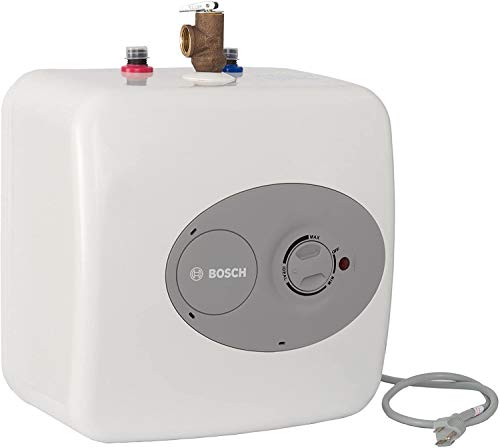
The Bosch Tronic 3000 T Mini Tank is a 2.5-gallon point-of-use heater designed for under-sink or compact installations. It features a high thermal efficiency of 98% and a compact footprint (13.75 W x 13.75 H x 10.75 D inches). This unit runs on 120V and draws 12A, plugging into a standard outlet for independent operation or integration with a larger hot-water system. Its glass-lined tank supports longevity and easier maintenance in busy kitchens or bathrooms, where quick access to hot water matters most.
Ideal for small spaces, the Bosch Tronic 3000 T provides dependable hot water where it’s needed without committing to a full-size tank. While it won’t supply large households at high flow rates, it excels as a dedicated under-sink heater or a supplementary source to reduce wait times for hot water at a single fixture. The simple plug-in design keeps installation straightforward for DIY enthusiasts or professional installers alike.
Buying Guide
Assess Your Hot-Water Demand
- Calculate gallons per minute (GPM) needs for your typical usage. A shower can draw 1.5–2.5 GPM, while multiple fixtures running simultaneously may require 3–4 GPM or more. Tankless units need to match peak demand; mini-tanks work well for single-point use.
- Consider climate and inlet water temperature. In colder climates, the same unit may provide less GPM due to greater temperature rise. Factor in distance from heater to fixtures as heat is lost along the run.
Power, Wiring, and Service Capacity
- Most high-capacity tankless heaters require 240V and dedicated breakers (often 40A per unit). Confirm your electrical panel has sufficient spaces and amperage to support simultaneous loads.
- Some smaller or point-of-use units run on 120V and are easier to install in apartments or retrofits. They typically support lower GPM and may serve a single fixture or two at moderate demand.
- Check local codes and consider professional installation if your panel or wiring is not up to current standards.
Space, Installation, and Versatility
- Tankless systems save space and can be wall-mounted, which benefits small homes. Ensure adequate clearance for servicing and venting (where applicable).
- Mini-tanks are ideal for under-sink use or limited spaces, but they deliver hot water at a fixed rate and may require a separate system for whole-home needs.
- Evaluate where you’ll place the unit to minimize pipe exposure and heat loss, and confirm compatibility with existing plumbing connections (NPT sizes, pipe materials).
Temperature Control and Safety Features
- Look for precise thermostats, LED displays, and easy-to-read temperature controls. A tight temperature range (within 1–2 degrees) helps prevent scalding and ensures comfort.
- Safety features such as auto shut-off, overheat protection, and pressure-relief considerations improve reliability and peace of mind.
Efficiency, Operating Costs, and Longevity
- Tankless models offer on-demand heating with no standby losses, often delivering higher energy efficiency compared with traditional tanks. Efficiency varies by model and usage pattern.
- Consider the overall lifecycle cost, including maintenance, potential replacement parts, and serviceability. A readily serviceable unit may reduce long-term costs during repairs.
Warranty and Support
- Warranty length and coverage for tank, parts, and labor matter when selecting a model. Check whether service is readily available in your region and whether extended warranties are offered.
- Brand reputation and dealer support can influence reliability and access to replacement parts over time.
Which Style Should You Choose?
- Tankless heaters are best for homes with variable hot-water needs and limited space, offering endless on-demand water at a potentially higher upfront cost but lower energy waste.
- Mini-tanks excel as point-of-use solutions near a sink or appliance, providing quick hot water with simple installation, though they don’t replace a full-home system.
- For whole-home needs in moderate climates, a properly sized tankless system with sufficient electrical service can deliver consistent performance with energy savings, while larger homes may require multiple units or staged installations.
Tips For A Smooth Buy
- Match the unit’s GPM rating to your peak water usage, not just average consumption.
- Verify electrical service capacity and panel space before purchase to avoid costly rewiring later.
- Plan for proper clearance, venting (if required), and access for maintenance.
By weighing these factors alongside the featured models, you can identify an electric water heater that aligns with your home’s size, water usage, and electrical infrastructure. Each option above offers distinct strengths, whether you prioritize space savings, straightforward installation, or robust on-demand performance.