In this guide
- Walnut End Grain Cutting Board By THETCHRY
- Acacia 3-Piece Cutting Board Set By Deer & Oak
- End Grain Acacia Cutting Board By Ziruma
- Non-Toxic Acacia Cutting Boards Set By Ziruma
- Acacia Cutting Board Set With Holder By Woodenhouse
- Buying Guide
- Choosing The Right Wood Species
- Size And Layout Considerations
- End Grain Versus Edge Grain
- Maintenance And Food Safety
- Practical Tips And Comparisons
Choosing the right wood species for cutting boards balances durability, knife-friendliness, and maintenance. This guide focuses on walnut and acacia, two popular woods prized for density, grain, and longevity. The five boards below illustrate how each species performs in real kitchen tasks, from professional-grade end-grain surfaces to durable everyday sets. Use the quick table to compare core attributes.
| Product | Material | Size (in) |
|---|---|---|
| THETCHRY Walnut End Grain | Walnut | 17×13 |
| Deer & Oak Acacia Set | Acacia | 15.7×11.8; 13×9.4; 10.2×7.1 |
| Ziruma End Grain Acacia | Acacia | 16×11 |
| Ziruma Non-Toxic 3-Board | Acacia | 16×11; 13×9; 10×7 |
| WOODENHOUSE Acacia Set | Acacia | 17×12; 15×11; 13×10 |
Walnut End Grain Cutting Board By THETCHRY

THETCHRY’s walnut board showcases a double-sided, end-grain design that enhances durability and minimizes knife wear. The end-grain structure allows each cut to bridge between wood fibers, helping the blade stay sharp longer and the surface resist visible wear. The board is finished with a smooth, self-healing surface that recovers quickly after use, keeping knife edges clean and precise.
Designed for practical kitchen tasks, this board includes a deep juice groove, capable of handling up to 3 ounces of liquid to prevent countertop spills. A built-in sorting compartment helps organize ingredients during prep, while stick-on rubber feet provide stability and reduce movement during chopping. The board also arrives in a gift box, making it a thoughtful option for gifting culinary enthusiasts.
With a generous 17″ x 13″ footprint, the THETCHRY board accommodates large vegetables, roasts, and cheese platters. The surface is knife-friendly, and the two-sided design supports different prep workflows without crowding the counter. Regular cleaning and oiling will extend its life, preserving its appearance and performance over years of use.
Acacia 3-Piece Cutting Board Set By Deer & Oak
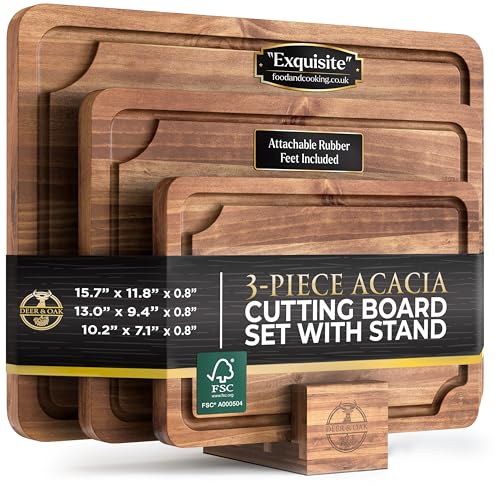
This three-board set from Deer & Oak uses FSC-certified acacia for durable, knife-friendly surfaces. Each board arrives pre-oiled and ready for heavy use, providing a smooth, food-safe surface that resists staining and splitting. The set includes large, medium, and small boards to support everything from meal prep to serving.
All boards come with a space-saving wooden stand and detachable non-slip feet, delivering stability during use and easy storage when not in use. The large board (15.7″ x 11.8″), medium (13″ x 9.4″), and small (10.2″ x 7.1″) sizes cover a wide range of kitchen tasks, from chopping vegetables to carving meats. Acacia’s natural hardness helps maintain knife edges while resisting moisture and warping over time.
Practically, the Deer & Oak set supports organized prep workflows and minimizes cross-contamination when used with color-coded tasks. Routine maintenance—cleaning, re-oiling as needed, and hand washing—will help preserve the boards’ color and longevity for years of service in busy kitchens.
End Grain Acacia Cutting Board By Ziruma

Ziruma’s end-grain acacia board emphasizes durability and knife protection. End-grain construction helps reduce blade dulling by allowing knives to slide across the surface with less wear, and it tends to self-heal as surface scratches close over time. The board is a substantial 1.5 inches thick, which adds rigidity and resistance to warping—ideal for daily kitchen tasks ranging from vegetables to meats.
Constructed from 100% natural acacia, the board is free from BPA and other harsh additives, making it a non-toxic option for food prep. The sturdy build and thick profile provide a stable cutting surface that holds up under heavy use while adding a classic wood aesthetic to any kitchen counter.
In terms of care, avoid soaking and hand-wash to preserve the wood’s integrity. A regular oiling schedule with a food-safe finish will help maintain moisture balance, preventing cracks and prolonging the board’s life in busy homes and professional settings alike.
Non-Toxic Acacia Cutting Boards Set By Ziruma

This Ziruma set emphasizes non-toxicity and safe preparation. Each board is finished with a clean blend of unbleached beeswax, flaxseed oil, and lemon oil—no mineral oil or harsh chemicals. The result is a food-safe surface that protects the wood and preserves its natural color while avoiding petroleum-based additives.
The set includes three sizes—large (16″ x 11″), medium (13″ x 9″), and small (10″ x 7″)—providing versatile options for various prep tasks. A notable feature is laser-engraved icons (meat, veggies, cheese) that help prevent cross-contamination, supporting safer kitchen practices. The boards are sturdy and durable enough for daily use and easy to store when not in use.
Maintenance remains straightforward: wipe clean, hand wash, and reapply the beeswax-flaxseed finish as needed. The absence of mineral oil and the eco-conscious finishing blend make these boards a safer, more sustainable option for households prioritizing natural materials.
Acacia Cutting Board Set With Holder By Woodenhouse

Woodenhouse offers a refined acacia cutting board set with a matching holder for organized storage. The boards are crafted from premium acacia wood, known for its durability, moisture resistance, and knife-friendly surface. The three boards measure 17″ x 12″, 15″ x 11″, and 13″ x 10″, with a thickness of 0.8 inches for a balanced combination of sturdiness and lightness.
These boards are designed for both cutting and serving, making them a versatile addition to any kitchen. The included holder keeps boards dry and accessible, while the natural grain of acacia adds warmth and character to the countertop. The surface supports smooth, controlled slicing and resists wear from daily chopping tasks.
Care involves regular hand washing and oil maintenance to preserve the wood’s color and integrity. The result is a long-lasting, aesthetically pleasing set that works well for meal prep, cheese boards, and presentation-ready platters.
Buying Guide
Choosing The Right Wood Species
Wood species influence hardness, edge retention, and maintenance needs. Walnut is dense and dark, offering a refined look and good knife feel, though typically lighter in hardness than acacia. Acacia is very hard, moisture resistant, and naturally resistant to scratching, making it durable for high-volume kitchens. End-grain boards (like the Ziruma and THETCHRY options) tend to be gentler on knives and self-heal over time, while solid edge-grain boards may be more budget-friendly but can show wear faster. Consider your cooking style, whether you value aesthetics, or long-term durability more.
Size And Layout Considerations
Board size should reflect your prep space and typical meals. A large board (17×13 inches or bigger) suits family cooking and carving tasks, while a compact board excels for quick chopped ingredients. Sets with multiple sizes offer flexibility for different tasks and reduce cross-contamination by allowing dedicated boards for meat, vegetables, and fruits. Storage solutions, such as stands or holders, can save counter space and improve drying after washing.
End Grain Versus Edge Grain
End-grain boards feature the natural grain facing outward, which helps protect knife edges and generally self-heal, reducing visible cuts. They are typically thicker and heavier but offer superior longevity in busy kitchens. Edge-grain boards are lighter and often more affordable but may show knife marks quicker and wear unevenly over time. For frequent prep and professional use, end-grain boards are usually the better long-term choice.
Maintenance And Food Safety
Maintenance affects both appearance and safety. Regular cleaning with mild soap and water, drying promptly, and oiling with a food-grade finish (mineral oil or a beeswax-based conditioner) helps prevent drying and cracking. Some boards are finished with non-toxic blends or avoid petroleum-based oils altogether, which can be preferable for households prioritizing natural ingredients. Avoid soaking and high-heat dishwasher cycles to prolong life. Proper storage and occasional resurfacing keep boards smooth and ready for daily use.
Practical Tips And Comparisons
- Choose end-grain for longevity and knife-friendliness, especially in high-use kitchens.
- Opt for sets when you want dedicated boards for different tasks and easy storage.
- Prefer non-toxic finishes if you are sensitive to chemicals or prefer natural options.
- Consider a juice groove if you often prepare juicy produce or raw meats to minimize mess.
- Balance aesthetics with practicality; a visually striking board that wears well is a lasting investment.