In this guide
- Shun Hinoki Small Cutting Board
- Yoshihiro Hinoki Cypress Cutting Board
- BOUMBI Hinoki Reversible Cutting Board
- Yoshihiro Hi Soft Cutting Board
- YAMASAN Kyoto Uji Hinoki Small Board
- Buying Guide
- Material And Knife-Friendliness
- Size And Layout
- Construction And Durability
- Care And Maintenance
- Hygiene, Safety, And Style
For Japanese knives, choosing a cutting board that translates the blade’s precision into smooth, controlled cuts matters as much as the knife itself. Hinoki and other light hardwoods offer surfaces that are gentle on edges, resist staining, and carry natural antimicrobial properties. This guide spotlights five top wood boards designed to complement Japanese blades, featuring Hinoki-based surfaces, reversible designs, and performance-focused construction. Each board brings a distinct balance of edge protection, size, and maintenance needs to help you select the best option for your kitchen workflow.
| Product | Material | Size (approx.) | Why It Fits Japanese Knives |
|---|---|---|---|
| Shun Hinoki Small Cutting Board | Hinoki | 10.75″ x 8.25″ | Medium-soft surface preserves blade edges; FSC certified |
| Yoshihiro Hinoki Cypress Cutting Board | Hinoki Cypress | XX-Large | Knife-friendly surface with warp-resistant core |
| BOUMBI Hinoki Reversible Cutting Board | Hinoki | 17.3″ x 9.8″ | Two faces plus durability from joined Hinoki |
| Yoshihiro Hi Soft Cutting Board | Hinoki-based Hi Soft | Large 19.6″ x 10.6″ | Soft surface reduces blade wear on large Japanese knives |
| YAMASAN Kyoto UJI Hinoki Small Board | Hinoki | Small (14″ x 8.66″) | Compact Hinoki surface ideal for delicate prep |
Shun Hinoki Small Cutting Board
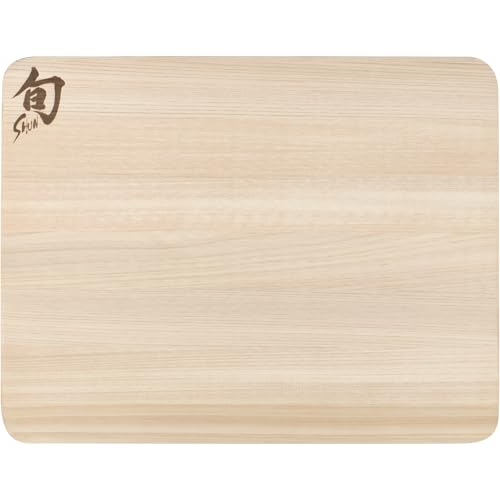
The Shun cutting board prioritizes a compact footprint without sacrificing knife-friendly performance. Made from hinoki, a lightweight Japanese cypress, the surface offers a gentle give that helps minimize edge damage during slicing and precise cuts common with sashimi and fine vegetable work. At 10.75 by 8.25 inches, it is easy to store beside the prep area or on a crowded counter. The board’s FSC certification underscores sustainable sourcing, aligning with mindful kitchen practices while delivering a beautiful, natural aesthetic that complements Japanese blade sets.
Its double-sided design adds versatility for small kitchens: one side can handle fish and vegetables, the other for ready-to-serve items or knife sharpening prep. Routine care emphasizes hand washing and thorough drying, followed by periodic oiling with a food-grade conditioner to maintain wood integrity. The Hinoki surface stays relatively forgiving on delicate edges, making it a practical, aesthetically pleasing choice for kitchens that feature traditional Japanese knives and precision cutting tasks.
Yoshihiro Hinoki Cypress Cutting Board
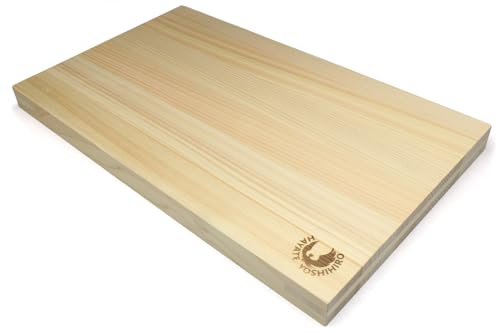
Authentic Japanese Hinoki is at the core of this professional-grade board. The Hinoki surface is knife-friendly, designed to protect blades and help sustain sharpness through repeated use. This model also incorporates a maple anti-twist core to resist warping, delivering stability for serious kitchen tasks. The overall size and construction strike a balance between generous workspace and manageability, making it suitable for chefs who regularly prep sashimi and other delicate cuts with high-end Japanese knives.
Maintenance emphasizes careful care: hand wash, dry promptly, and oil periodically with food-safe products to preserve moisture balance and reduce drying risks. With a focus on durability and blade protection, this board remains a reliable work surface for long-term knife performance, especially when used with Japanese carbon steel blades that benefit from a gentler contact surface. Its design supports a clean, steady chop or slice across a broad prep area.
BOUMBI Hinoki Reversible Cutting Board

BOUMBI’s reversible Hinoki board emphasizes practical versatility. Built from solid Hinoki, the board offers two cutting surfaces in one piece, allowing you to switch sides after heavy use or to separate raw meat prep from produce. The design includes joined pieces to minimize splitting and a sturdy, easy-to-grip structure that accommodates everyday kitchen tasks as well as larger, more intricate sashimi prep sessions. The natural fragrance and softness of Hinoki help protect blade edges, making it a favorable option for delicate Japanese knives in busy kitchens.
Care focuses on routine hand washing and oiling with food-safe mineral oil to preserve the wood’s moisture and prevent cracking. Because the board relies on joined segments, it is wise to inspect seams periodically and avoid dishwasher contact. The reversible layout helps distribute wear evenly, extending life for long projects and keeping a clean, smooth cutting plane for careful blade work across seafood, vegetables, and fruit prep.
Yoshihiro Hi Soft Cutting Board

The Yoshihiro Hi Soft board is designed to deliver a high-performance cutting surface that emphasizes blade longevity. The large profile—approximately 19.6 by 10.6 inches—provides ample space for sashimi prep, filleting, and multi-step tasks, making it ideal for prominent Japanese blade work. The Hi Soft construction aims to reduce blade contact stress, supporting durability for carbon steel knives that are common in professional sashimi prep. This board blends generous workspace with a surface carefully tuned for minimal edge wear during repetitive cuts.
Care instructions focus on avoiding dishwasher exposure and maintaining moisture balance through regular oiling with a food-grade product. Its substantial size supports complex prep without crowding, while the softer surface helps prevent micro-chipping and edge micro-damage. When used with high-carbon blades, this board can contribute to cleaner, more consistent cuts and longer blade life compared with harder-wood alternatives, provided proper maintenance is observed.
YAMASAN Kyoto Uji Hinoki Small Board

The YAMASAN Kyoto Uji Hinoki board emphasizes traditional Hinoki wood in a compact form. Hinoki is prized for its delicate fragrance and forgiving hardness, which helps preserve knife edges during routine fish and vegetable prep. The small size is well-suited to tight counter spaces or dedicated sashimi stations, offering a calm, precise cutting surface that aligns with the careful handling required by Japanese blades. Its natural beauty also adds a touch of authentic Japanese kitchen aesthetics to any prep area.
Maintenance remains straightforward: hand wash, dry promptly, and apply food-grade oil periodically to maintain moisture and prevent cracking. The small footprint makes storage easy while still providing a reliable, blade-friendly surface for delicate cuts and meticulous knife work typical of Hinoki boards. Regular upkeep ensures longevity and performance consistent with traditional Japanese knife care practices.
Buying Guide
Material And Knife-Friendliness
Wood type affects edge wear and cut feel. Hinoki offers a softer, knife-friendly surface that protects delicate blades, making it a popular match for Japanese knives. If you prefer a slightly firmer feel, look for boards with stronger core construction or optional anti-warp layers, but ensure the board still remains gentle enough to preserve edge integrity.
Size And Layout
Choose a board size that fits your kitchen workflow. Smaller boards are ideal for intricate sashimi prep and compact spaces, while larger boards provide room for multi-step tasks and larger knives. Reversible designs add longevity by spreading wear across two faces, reducing the need for frequent replacements.
Construction And Durability
One-piece Hinoki boards or laminated boards with secure joinery tend to resist warping better than simple slabs. Features like anti-warp cores or vacuum-dried processing improve stability over time. Inspect seams and joints for signs of splitting, especially on larger boards that face heavier use.
Care And Maintenance
Most wooden boards require hand washing and thorough drying after each use. Regular oiling with food-grade mineral oil or beeswax-based treatments helps preserve moisture and prevent cracking. Avoid dishwasher exposure and high heat, which can dry the wood and shorten its life. Some boards come pre-finished; others may need ongoing conditioning for best performance.
Hygiene, Safety, And Style
Look for boards with food-safe finishes and cleanable surfaces. Natural woods like Hinoki offer antimicrobial benefits and distinctive aesthetics that complement Japanese knife sets. Consider how the board’s color, grain, and overall look integrate with your kitchen design, as well as how easy it is to clean between tasks involving raw proteins and produce.