Best Traps for Fruit Flies Effective Indoor Solutions for a Fly-Free Home
Fruit flies can quickly infest kitchens, pantries, and dining areas, especially when ripe fruit, moisture, or trash isn’t kept in check. The best indoor traps combine targeted attractants with easy disposal, creating a steady decline in activity without clutter or harsh chemicals. This guide reviews five top options, spanning lure-based traps, UV/light catches, and sticky traps, to help American households choose a solution that fits space, routine, and safety preferences. Below is a quick product overview table to compare core benefits at a glance.
| Product | Brand | Key Benefit | Trap Type |
|---|---|---|---|
| Terro Fruit Fly Traps Indoor | Terro | Rapid reduction with long lure supply | Lure-based |
| Zevo Flying Insect Trap With Blue Light | ZEVO | 24/7 attraction with blue/UV light; mess-free disposal | Light-based |
| Zevo 2 Flying Insect Traps | ZEVO | Includes refill cartridges; continuous attraction | Light-based with cartridges |
| Fooxem Smart Fly Trap Indoor | Fooxem | Smart control with temperature/humidity monitoring | Light + fan + sticky boards |
| JPMOS Yellow Sticky Fly Traps | JPMOS | No odor; non-toxic and easy to use | Sticky traps |
Terro Fruit Fly Traps Indoor

Terro’s four-pack of indoor traps emphasizes fast-acting elimination with a built-in lure designed for quick draw. Each trap uses a non-staining lure that delivers up to 45 days of effective trapping, and the package includes a lure supply lasting up to 180 days, helping households maintain ongoing control without frequent repurchases. The apple-shaped design blends with fruit bowls and pantry surfaces, reducing visual clutter while remaining conspicuous enough to attract flies. This option is ideal for kitchens and dining areas where fruit flies tend to congregate around produce, trash, or fermentation odors.
For best results, position traps near hotspots such as fruit bowls, compost bins, and sinks where moisture and residues accumulate. Replace the lure according to the product schedule to preserve potency, and keep traps away from direct sunlight and heat that might degrade the lure. Because the design is discreet, it is suitable for rental apartments, shared spaces, and homes seeking an unobtrusive, low-maintenance solution. Terro’s lure-based approach provides a straightforward path to reducing fruit fly populations without sprays or strong scents.
- Pros: Fast-acting elimination; Long-lasting lure; Discreet and attractive design; 180 days of lure supply
- Cons: May take a few days to significantly reduce counts in very heavy infestations; replacement lure timing matters for peak performance
Zevo Flying Insect Trap With Blue Light

Zevo’s plug-in flying insect trap uses blue and UV light to attract flying insects around the clock, including fruit flies, gnats, and house flies. The setup emphasizes mess-free disposal: a strong adhesive backing captures bugs without requiring you to touch them, and the cartridge can be disposed of once full. The device is designed for easy placement in rooms where insects are most active. When powered, it provides continuous attraction, making it a practical choice for living rooms, kitchens, and entryways where several flies appear at once and a quick, maintenance-light solution is preferred.
Usage is simple—stick the device in an outlet-ready location, swap the disposable cartridge when needed, and let the adhesive do the work. The emphasis on discreteness and ease of care makes Zevo a popular choice for households seeking a low-effort, non-chemical approach to controlling fruit flies and other small flying pests. It’s especially suited for users who want a set-and-forget option that minimizes ongoing effort.
- Pros: 24/7 attraction; mess-free disposal; easy to install
- Cons: Adhesive-based catch may require occasional wall cleaning; cartridge replacements add ongoing cost
Zevo 2 Flying Insect Traps

Zevo 2 expands on the original in a compact package, offering blue and UV light technology for continuous attraction of fruit flies, gnats, and house flies. Like the first Zevo model, it relies on a closed design with an adhesive backing that enables mess-free disposal. The system is designed for quick plug-in use and straightforward maintenance: when a cartridge fills, you lift it out and discard it. The multiple devices allow targeted coverage across larger rooms or adjacent spaces, providing a scalable approach to fly management in homes that frequently entertain or cook.
Key advantages include minimal cleanup and a steady supply of trapping power, aided by the same safe, non-chemical approach. The product’s strength lies in its ability to operate effectively without sprays or attractants that may irritate sensitive individuals or pets. For households dealing with persistent fruit flies, another Zevo unit or a combined strategy with lure-based traps can offer broader coverage and continuous control across rooms.
- Pros: Constant attraction; easy maintenance; scalable for larger areas
- Cons: Requires compatible cartridges; higher upfront cost for multiple units
Fooxem Smart Fly Trap Indoor

The Fooxem device combines several mechanisms to maximize fruit fly control in a single unit. It uses 365–395nm light to attract pests, a powerful fan to pull them in, and sticky glue boards to capture them safely. This trap is described as quiet, suitable for family spaces, and pet-friendly since it does not rely on chemical pesticides. A standout feature is the smart chip and light sensor, enabling auto night mode and manual 24/7 settings. With five brightness levels and variable fan speeds, it can adapt to different room sizes and levels of activity, making it versatile for living rooms, kitchens, and home offices.
Fooxem also offers real-time temperature and humidity tracking, helping users monitor indoor air quality while managing pest pressure. The 2-in-1 approach—trapping insects and improving environmental awareness—can be particularly appealing to households focused on a healthier living space. It pairs well with sticky traps for plants in rooms where fungus gnats are common, providing a broader strategy against multiple flying pests.
- Pros: 365–395nm light; smart controls; temperature/humidity monitoring
- Cons: More complex setup; higher energy use than basic sticky traps
JPMOS Yellow Sticky Fly Traps
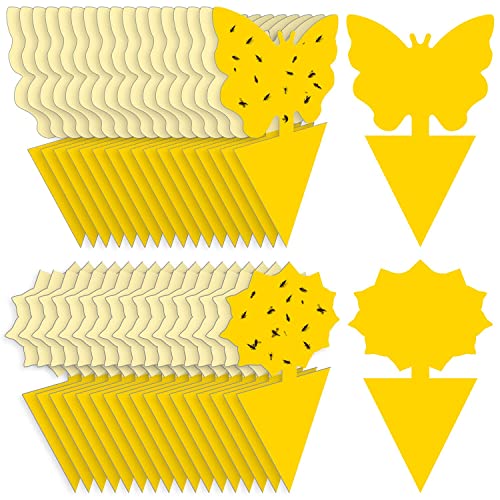
JPMOS offers a 36-pack of yellow sticky traps designed for both indoor and outdoor use, with bright yellow coloration that attracts a range of flying plant pests. The traps rely on high-quality glue to prevent escapes, forming a non-toxic, odorless solution suitable for homes with children and pets. They are easy to deploy—simply peel and insert into plant pots or around fruit bowls and windows. This approach is well-suited for growers, households with potted plants, or spaces where a simple, scalable method is preferred to address steady pest pressure over time.
The design emphasizes safety and ease, appealing to those who want a low-maintenance option that doesn’t require electricity or attracting lures. While sticky traps may not offer immediate population suppression like active electronic devices, they excel in perimeter coverage and long-term pest monitoring when combined with other attractants. This makes JPMOS a good companion product in a multi-trap strategy.
- Pros: Non-toxic; odorless; easy to place and replace
- Cons: May require multiple stakes for full room coverage; effectiveness depends on proper placement
Buying Guide
Choosing the right trap involves balancing the space you’re protecting, the level of fruit fly activity, and any safety considerations for people and pets. Below are several key purchase considerations and practical comparisons to help you decide which combination of traps may work best in your home.
- Trap mechanism: Lure-based traps rely on attractants that draw flies into a contained space, while blue/UV light traps use illumination to lure and capture. Sticky traps passively catch insects that land on the glue. For ongoing infestations, a mix of lure-based devices and light traps can provide both immediate relief and long-term management.
- Space and coverage: Larger rooms or open kitchens may benefit from multiple devices or a high-coverage sticky approach. If you have multiple problem spots (near trash, drains, or fruit bowls), placing traps in those zones improves results.
- Safety and allergens: Non-toxic sticky traps and UV-light devices are generally safe for households with kids and pets. If chemical repellents or sprays are problematic, consider a primarily physical trapping system with non-chemical attractants.
- Maintenance and refills: Lure-based traps typically require replenishment over several weeks or months, whereas UV-light traps rely on cartridges or disposable components. Consider the ease of replacement and the cost of ongoing consumables when budgeting.
- Disposal and cleanliness: Mess-free disposal is a common advantage of UV/light traps with adhesive backings. Sticky traps require minimal handling but may leave residue; plan for easy wall or surface cleaning during replacements.
- Noise and energy use: Plug-in light traps consume energy and may emit a low level of fan or motor noise. If you prefer a silent setup, sticky traps placed strategically can be complemented by a single light trap in a less-used room.
- Durability and aesthetics: Discreet, apple-shaped lure traps or wall-facing light traps blend into living spaces more easily than bulky devices. Aesthetics can influence placement decisions, which in turn affects effectiveness.
- Cost and value: A combination approach—one or two high-coverage light traps plus several sticky traps—can offer broader coverage and better overall value in households facing persistent infestations, without a heavy price tag on one device.
In practice, a practical strategy for many American homes is to combine a few top options: a lure-based Terro trap for rapid population reduction in kitchens, a Zevo light-based unit in living areas or near entryways for continuous capture, and JPMOS sticky traps around potted plants and fruit storage zones as a low-maintenance perimeter measure. Fooxem’s smart trap adds environmental awareness and adjustable settings for households that want a more technologically integrated approach. This blended setup provides fast relief, ongoing control, and easy maintenance across varied indoor spaces.