In this guide
Choosing a tankless under-sink water filtration system means filtered water on demand, space-saving design, and reduced water waste. This guide reviews five top-rated tankless models, highlighting capacities, filtration stages, certifications, and ease of installation to help homeowners pick the best fit for drinking and cooking water. Each product below includes a direct Amazon link, imagery, and the key features that differentiate it in a crowded market.
| Product | Brand | Model | Key Benefit |
|---|---|---|---|
| G3P800 | Waterdrop | G3P800 | 800 GPD, Tankless, LED purifier |
| WD-T3-C | Waterdrop | WD-T3-C | 8-stage filtration, 450 GPD |
| G2 | Waterdrop | G2 | 7-stage, 400 GPD, 1:1 drain |
| SimPure T1-400UV | SimPure | T1-400UV | UV sterilization, near 0 TDS |
| ROCT-A1000 | APEC | ROCT-A1000 | 1000 GPD, 2:1 drain, high efficiency |
Waterdrop G3P800 Tankless RO System
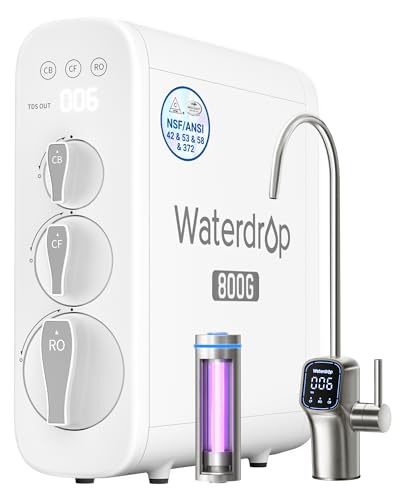
The Waterdrop G3P800 is a high-capacity, tankless reverse osmosis system designed for busy households. It operates without a storage tank and delivers up to 800 gallons per day. The system is certified against NSF/ANSI 58 for TDS reduction, and NSF/ANSI 42 and 53 for chlorine, taste, and odor reduction. It also carries NSF/ANSI 372 for lead-free materials and a smart faucet with a display that reports water quality (TDS) and filter life. A 3:1 pure-to-drain ratio helps conserve water compared with older RO designs, while the compact, under-sink footprint saves space.
- 800 GPD capacity for large families or high-demand use.
- Tankless design with a smart faucet that shows TDS and filter life.
- Certified to NSF/ANSI 42, 53, 58, and 372 for contaminants and materials.
- 3:1 drain ratio reduces water waste; under-sink installation.
Notes: The system emphasizes a user-friendly experience with a compact footprint and verification from third-party labs. Installation should consider power accessibility if the smart faucet is used and a stable cold-water supply line for best performance.
Waterdrop WD-T3-C Tankless RO System

The WD-T3-C tiered 8-stage filtration system uses a 0.0001μm RO membrane to reduce heavy metals, chlorine, PFAS, PFOS, and more for consistently high-quality drinking water. It delivers up to 450 GPD and features a plug-in setup with LED indicators and continuous automatic flushing, ensuring fast, clean water. The design remains tankless, saving space and keeping water fresh at the point of use. Note that electrical power is required for operation, but the system is designed for straightforward installation under most sinks.
- 8-stage filtration with a 0.0001μm membrane for thorough purification.
- 450 GPD production with a 2:1 pure-to-drain ratio for efficiency.
- LED indicator and automatic flushing for convenience.
- Under-sink, tankless design; plug-in power required.
Replacement filters and components are commonly available, and the compact unit is suitable for kitchens with limited counter space. Proper electrical connection and proper clearance behind the cabinet are recommended during installation.
Waterdrop G2 Tankless RO System

The Waterdrop G2 offers a 7-stage filtration process with a 400 GPD capacity and a tankless design. Certified by NSF/ANSI 372 for lead-free materials, this model emphasizes a 1:1 drain ratio and easy under-sink installation. Two included filters provide ready-to-use filtration out of the box, and the system’s compact setup supports kitchen aesthetics and space constraints. It is FCC listed and designed for efficient, reliable water purification in households that demand solid performance with straightforward maintenance.
- 7-stage filtration; 400 GPD; 1:1 drain ratio.
- Tankless design with space-saving footprint.
- NSF/ANSI 372 certified for lead-free materials; FCC listed.
- Includes replacement filters in the package; easy installation.
As with other tankless RO systems, ensure adequate cabinet depth for fittings and ensure the cold-water supply line can accommodate the system’s flow. Regular filter changes help maintain optimal contaminant reduction and water taste.
SimPure T1-400UV Tankless RO System

The SimPure T1-400UV adds UV sterilization to a tankless RO system for additional microbial control. It is NSF/ANSI 58 certified and claims near 0 TDS with robust 400 GPD capacity. The system integrates an automatic UV mechanism that activates with flow, helping ensure treated water is free of microorganisms. The tankless design saves space, and the built-in UV feature provides an extra layer of protection, especially in households where water quality concerns extend beyond chemical contaminants.
- 400 GPD with near 0 TDS target; UV sterilization adds microbial control.
- NSF/ANSI 58 certified; 10-stage or multi-stage filtration is indicated by model design.
- Tankless under-sink installation with a compact footprint.
- Requires power for UV operation; install with proper electrical access.
Note that this model integrates UV as part of its purification process. Regular maintenance includes lamp replacement per manufacturer guidance, in addition to standard filter changes for the RO membrane and pre/post filters.
APEC Tankless RO System ROCT-A1000

The APEC ROCT-A1000 is a high-capacity tankless RO system designed for demanding households. It features a 2:1 pure-to-drain ratio and can deliver up to 1000 gallons of filtered water per day. The system carries NSF 372 and 58 certifications, highlighting both lead-free materials and effective contaminant removal. As a three-stage or multi-stage filtration unit depending on the included cartridge set, it emphasizes efficiency and strong performance while maintaining a compact under-sink profile.
- 1000 GPD capacity with a 2:1 drain ratio for efficiency.
- NSF 372 and 58 certified for materials and filtration performance.
- Tankless design saves space; compatible with residential water supplies.
- High-efficiency filtration suitable for large households or frequent use.
Installation should consider adequate storage space behind the cabinet and ensuring a secure water supply line. Regular membrane and filter replacements maintain performance and prevent taste changes or contaminant breakthrough.
Buying Guide
Key considerations help tailor a tankless filtration system to specific needs:
- Filtration technology: Tankless RO systems generally offer thorough contaminant removal, including heavy metals, PFAS, and chlorine compounds. Ultrafiltration and multi-stage filters provide alternatives that preserve minerals or target specific contaminants.
- Capacity and flow: Measured in GPD, capacity should align with daily water needs. Higher GPD benefits families who rely on filtered water for cooking, beverages, and pets.
- Drain ratio: A lower drain ratio (for example, 1:1 or 2:1) reduces water waste. Tankless models often emphasize 2:1 or better efficiency while maintaining performance.
- Certifications: Look for NSF/ANSI 42/53/58/372 and similar credentials to verify contaminant reduction and material safety. FCC listing can indicate compliance with electronic components and safety standards.
- Power requirements: Some models include LED displays or UV sterilization that require electricity. Ensure your cabinet has appropriate power access and safe wiring practices.
- Installation space: Tankless systems save cabinet space but require adequate clearance for fittings and filters. Check cabinet depth and width before purchase.
- Maintenance and cost of replacement filters: Consider cartridge life, frequency of changes, and long-term costs when selecting a model.
- Water source compatibility: Municipal water and well water have different contaminants. Some models specifically announce suitability for municipal water and resist well-water hardness or iron levels.
- Smart features: LED displays, TDS monitoring, and filter life indicators help manage maintenance and ensure consistent water quality.
- Warranty and support: A strong warranty and accessible customer support can simplify troubleshooting and parts replacement.