Best Steel for Chef Knives: A Practical Guide to Sharp Blades
Choosing the right knife steel affects edge retention, corrosion resistance, and daily performance in a busy kitchen. This guide highlights five chef knives representing distinct steel families, from German EN1.4116 to Damascus-pattern and Global’s molybdenum-vanadium stainless steel. Each option balances sharpness, durability, and maintenance for different cooking styles and budgets. The table below provides a quick snapshot of the five picks, helping you compare steel types, strength, and practical use at a glance.
| Product | Brand | Steel Family | Key Benefit |
|---|---|---|---|
| MOSFiATA 8-Inch Pro Chef Knife | MOSFiATA | EN1.4116 High-Carbon German Stainless | Razor edge and ergonomic Micarta handle |
| PAUDIN 8-Inch Chef Knife | PAUDIN | High-Carbon Stainless Steel | Ultra-sharp blade; 2 mm thickness |
| SHAN ZU 8-Inch Damascus Chef Knife | SHAN ZU | 10Cr15Mov Damascus Core (67 layers) | Durable, rust-resistant with striking pattern |
| HOSHANHO 8-Inch Chef Knife | HOSHANHO | 10Cr15CoMoV High-Carbon Stainless | 60 HRC hardness; ergonomic pakkawood handle |
| Global 8-Inch Chef’s Knife | Global | Molybdenum-Vanadium Stainless | Lightweight; razor-sharp edge retention |
MOSFiATA 8-Inch Pro Chef Knife

The MOSFiATA 8-inch chef knife uses EN1.4116 high-carbon German stainless steel, delivering a blend of edge retention and corrosion resistance. Its blade is ground to a precise 16-degree edge per side, enabling clean, controlled cuts on vegetables, proteins, and more. The 2 mm blade thickness provides rigidity without sacrificing agility, making it suitable for a wide range of kitchen tasks—from mincing herbs to slicing through boneless portions.
Ergonomics center the design. The knife employs full tang construction for durability, with an ergonomic handle that combines Santoprene for comfort and polypropylene for resilience. A triple-riveted Micarta finish adds durability and grip security, while textured finger points help prevent slips during long prep sessions. This knife appeals to both home cooks seeking reliability and professionals who value consistent performance.
PAUDIN 8-Inch Chef Knife

PAUDIN’s 8-inch chef knife is built with high-carbon stainless steel to deliver a robust blade for daily kitchen work. The 8-inch length is versatile for chopping, slicing, and dicing across a variety of ingredients. The blade thickness, at 2 mm, provides a balance between rigidity and responsiveness, supporting precise cuts without feeling heavy in hand. It is designed for both home kitchens and professional environments, offering dependable performance from prep to plate.
The blade is hand-polished by skilled craftsmen to ensure long-lasting sharpness, with an emphasis on maintaining a consistent edge over time. The knife’s geometry supports efficient slicing and controlled cuts, while the overall balance helps reduce fatigue during extended prep sessions. Its durability and ease of maintenance make it a practical choice for everyday culinary tasks.
SHAN ZU 8-Inch Damascus Chef Knife
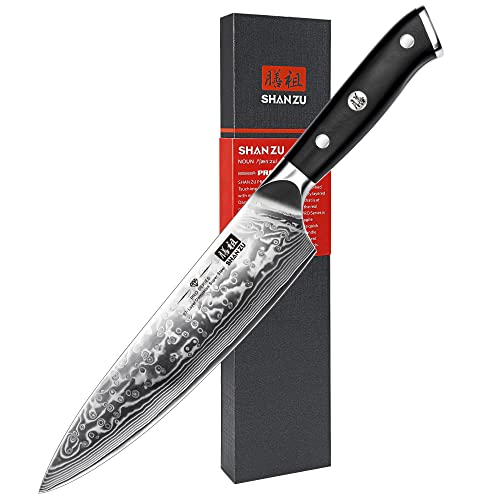
SHAN ZU’s 8-inch Damascus chef knife features a core of 10Cr15Mov Japanese steel wrapped by a layered Damascus exterior. The blade is described as having a high hardness and rust resistance, with a 67-layer construction that enhances durability and reduces sticking. The forged structure supports a long-lasting edge and reliable performance across a range of kitchen tasks, from delicate vegetable cuts to robust meat processing.
The knife’s Damascus layering provides an eye-catching pattern, while the core steel contributes to edge stability and corrosion resistance. The result is a versatile blade suited for cooks who value both technical performance and distinctive aesthetics. The grip is designed to complement the blade’s balance, promoting control during precise, repetitive motions.
HOSHANHO 8-Inch High-Carbon Chef Knife

HOSHANHO’s 8-inch kitchen knife blends Japanese high-carbon steel (10Cr15CoMoV) with strong corrosion resistance and durability. The blade hardness can reach up to 60 HRC, enabling a sharp edge that holds up under regular kitchen use. The blade finishes with a matte look, reducing glare during prep, while the pakkawood handle offers a comfortable, balanced grip. Ice-tempered and heat-treated construction contributes to reliability across cutting tasks, from root vegetables to lean proteins.
The ergonomic design emphasizes a smooth pinch grip, with a sloped bolster that helps guide the hand for safer, more controlled cuts. The combination of steel chemistry and careful finishing results in a knife that performs well in busy kitchens while presenting a refined, durable aesthetic.
Global 8-Inch Chef’s Knife

Global’s 8-inch chef’s knife emphasizes a lightweight, precisely balanced design. The blade is made from high-tech molybdenum-vanadium stainless steel, chosen for strength, corrosion resistance, and edge retention. The knife’s weight and balance enable easy maneuverability for quick, accurate cuts, making it particularly suitable for fine slicing and uniform portioning. The blade’s structural integrity supports a long-lasting edge in demanding kitchen environments.
Global knives are recognized for their balanced feel and consistent performance. The stainless steel construction resists rust, and the ergonomic, sometimes uniquely shaped handle provides a secure grip across a range of hand sizes. This knife blends precision with practical everyday use, appealing to cooks who value control and efficiency in their prep work.
Buying Guide
Several core factors influence knife performance beyond the appearance of the blade. Edge retention, hardness, corrosion resistance, sharpening ease, weight, and overall balance should align with your cooking style and maintenance willingness. Understanding steel families helps you match a knife to your routine, whether you’re a home cook, a professional chef, or a dedicated hobbyist.
Blade Materials And Their Tradeoffs
Stainless steels offer excellent corrosion resistance and easier cleanup, but may require more frequent sharpening than high-carbon options. High-carbon stainless steels strike a balance between edge retention and rust resistance, though maintenance remains essential. Damascus-pattern blades often combine a hardened core with a layered exterior to improve wear resistance and aesthetic appeal, but real-world performance depends on the core alloy. Lightweight steels, like Global’s molybdenum-vanadium blend, favor maneuverability and precision for delicate tasks.
Hardness, Wear, And Sharpening
Hardness, measured in HRC, indicates edge retention. Most kitchen blades fall roughly in the 56–62 HRC range. Higher hardness can hold an edge longer but may be tougher to sharpen. Softer steels sharpen more quickly but may dull faster under heavy use. When selecting a knife, consider how often you’ll sharpen and what sharpening tools you prefer, as this affects long-term usability.
Maintenance And Longevity
- Hand wash after use; dry thoroughly to prevent corrosion.
- Hone regularly to maintain the edge between sharpenings.
- Sharpen with a whetstone or guided system appropriate to the blade’s steel family.
- Store in a dry place; use a sheath or magnetic strip to avoid contact with hard surfaces.
- Avoid cutting on hard surfaces like stone or metal to preserve the edge.
Choosing The Right Knife For Your Kitchen
For heavy chopping and tough tasks, seek higher-hardness blades that resist dulling over time, understanding they may require more effort to restore. For routine prep and easy maintenance, high-carbon stainless options provide a favorable balance of edge life and rust resistance. Damascus-pattern knives offer aesthetic appeal and robust wear resistance when paired with a resilient core steel. If you value lightness and agility, a blade like Global’s stainless line can improve control for precise, quick cuts.
Practical Comparisons And Scenarios
- Professional kitchens: prioritize durability, edge retention, and rust resistance; a high-quality stainless or Damascus-pattern blade can perform well with proper care.
- Home cooks with busy schedules: select stainless or high-carbon stainless for easier maintenance and reliable performance.
- Thin-slice tasks (herbs, vegetables, fish): lighter knives like Global can offer superior control and maneuverability.
- Sharpening preference: if you enjoy stone sharpening, harder steels may reward a precise, regular routine; if you prefer quicker touch-ups, slightly softer steels can be more forgiving.
In short, the best steel for a chef’s knife depends on how you cook, how you care for your tools, and how you balance edge life with maintenance effort. The five knives reviewed here illustrate a spectrum of steel families, showing that durability, edge performance, and handling can be aligned with different culinary styles.