In this guide
- Tsurpcao Hexagon Tile Spacers 1/8 Inch, 1200 Pcs
- uxcell 100Pcs Y Type Tile Spacers 1.5mm
- Hexagon Tile Spacers 500 Pcs Y Type Spacers
- uxcell 300Pcs Y Type Hexagon Tile Spacers 3mm
- Pangda 1500 Pcs White Hexagon Tile Spacers
- Buying Guide
- Spacer Type And Pattern Compatibility
- Gap Size And Tile Size
- Material Durability And Reusability
- Quantity, Packaging, And Storage
- Installation Considerations And Compatibility
- Cost-Effectiveness And Project Longevity
Hexagon tile projects demand precise, repeatable spacing to maintain a balanced honeycomb look. The right spacers ensure even grout joints, prevent tile shifting during mortar setting, and support a clean, professional finish. This guide highlights five top-rated spacers that work well with hexagon patterns, emphasizing durability, accuracy, and ease of use. Use the summary table below to compare key specs at a glance and then dive into detailed product sections to determine which kit best fits your project size and tile dimensions.
| Product | Brand | Size / Gap | Type | Count |
|---|---|---|---|---|
| Hexagon Tile Spacers 1/8 | Tsurpcao | 1/8 in (≈3 mm) | Hexagon spacers | 1200 pcs |
| uxcell Y Type Spacers 1.5mm | uxcell | 1.5 mm | Y-Type spacers | 100 pcs |
| Hexagon Tile Spacers 2mm | Tsurpcao | 2 mm | Y-Type hex spacers | 500 pcs |
| uxcell Y Type Spacers 3mm | uxcell | 3 mm | Y-Type spacers | 300 pcs |
| Pangda Tile Spacers 1/8 Inch | Pangda | 3 mm / 1/8 in | Y-Type spacers | 1500 pcs |
Tsurpcao Hexagon Tile Spacers 1/8 Inch, 1200 Pcs

This kit provides a generous quantity of hexagon spacers designed specifically for hexagonal layouts. The spacers are molded in white plastic for visibility against most tile colors and ensure consistent gaps across large areas, which helps maintain the clean honeycomb pattern that hex tiles are known for. The included spacers are compact enough to place between tiles without interfering with adhesive application, while their uniform shape supports stable tile alignment during setting.
- Contents: 1200 spacers (±2%)
- Size: 18.5 x 16.5 x 3 mm (approx. 0.73″ x 0.65″ x 0.12″)
- Material: Plastic; Color: White
- Suitable tile gap: 3 mm (0.12″)
- Designed for hexagon honeycomb patterns; high visibility for easy placement
uxcell 100Pcs Y Type Tile Spacers 1.5mm

Designed to provide even gaps in tile installations, these Y-type spacers help maintain uniform grout lines and prevent tile misalignment during mortar setting. Although not explicitly labeled for hexagon tiles, their Y-shaped design benefits honeycomb patterns by maintaining stable spacing across both floor and wall applications. The kit uses a durable PE plastic formulation, offering resilience against bending and deformation through multiple uses.
- Pack: 100 spacers (+/-2%)
- Gap: 1.5 mm (0.06″)
- Size: 19 x 16 x 2.5 mm (L x W x H)
- Durability: PE plastic; resistant to bending
- Good for even spacing and warp prevention in hex tile layouts
Hexagon Tile Spacers 500 Pcs Y Type Spacers

With 500 spacers, this set focuses on reliable spacing for both floor and wall hexagon tile installations. The spacers are intended to guarantee equal distance between tiles and prevent movement during the solidification process, which helps ensure a precise honeycomb layout. The reported dimensions place spacers squarely in the middle range for comfortable handling in tight hex patterns, while the all-plastic construction supports reuse on multiple projects.
- Count: 500 spacers
- Size: 15.4 x 15.4 x 2 mm
- Material: Plastic; color not specified
- Purpose: Maintain equal tile distance and prevent shifting during setting
- Suitable for hexagon patterns on floors or walls
uxcell 300Pcs Y Type Hexagon Tile Spacers 3mm
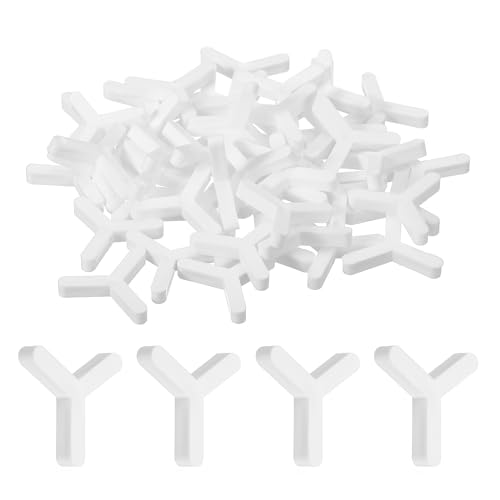
This package brings a moderate quantity of spacers sized to a 3 mm gap, suitable for hexagon tile installations requiring slightly larger grout lines for both aesthetics and durability. The Y-type spacers are designed to stay in place as mortar cures, reducing the risk of tile migration. The spacers are described as durable PE plastic, which supports repeated use on multiple tiling projects without deforming under typical installation pressures.
- Count: 300 spacers
- Gap: 3 mm (0.12″)
- Size: 19 x 16 x 3 mm
- Material: PE plastic; durable and reusable
- Helps prevent tile movement during mortar setting in hex patterns
Pangda 1500 Pcs White Hexagon Tile Spacers

This large-volume kit is designed for expansive hexagon tile projects, offering an ample supply of spacers stored in organized packaging. The spacers are described as 3 mm (1/8 inch) in size, ensuring consistent grout joints across sizable honeycomb patterns. The packaging is a transparent box for easy storage, and the spacers are made from durable PE plastic designed to withstand repeated use with proper care.
- Contents: 1500 spacers in a transparent storage box
- Size: 3 mm (1/8 inch)
- Material: PE plastic; durable and reusable
- Designed for hexagon tile layouts; helps achieve even gaps
- Suitable for large-scale wall or floor installations
Buying Guide
Spacer Type And Pattern Compatibility
Hexagon tile layouts rely on honeycomb geometry, where grid alignment and grout width are critical. Hexagon-specific spacers (often square or hex-shaped themselves) provide stable contact points that minimize tile skew and help preserve a consistent grout line around each tile. Y-type spacers are versatile and work across various tile shapes, including hexagons, but for the tight, repeating honeycomb pattern, hexagon-specific spacers can yield the most uniform joints. When your project features mixed tile shapes, prioritize spacers that support both stable spacing and easy removal after curing.
Gap Size And Tile Size
Gap size determines the final grout width and overall tile appearance. Common hexagon spacer gaps range from 1.5 mm to 3 mm (about 0.06″ to 0.12″). Smaller gaps create a denser honeycomb look, while larger gaps emphasize each tile edge and grout line. Before purchasing, measure the tile’s nominal width and the desired grout breadth. For large-format hexagon tiles, a 2–3 mm gap often strikes a balance between structural integrity and visual appeal. If you’re aiming for a mosaic effect, a smaller gap may be preferred, provided the tiles maintain a consistent plane.
Material Durability And Reusability
Most spacers used here are made from PE or durable PVC. PE spacers generally offer good wear resistance and are less likely to deform under repetitive use, making them suitable for DIY projects and professional workflows. Reusability depends on how carefully you handle them during removal and cleaning. If you expect multiple hexagon tiling projects, consider sets that advertise reusable properties, storage solutions, and easy cleaning to extend the life of the spacers.
Quantity, Packaging, And Storage
Project scale should guide quantity. Large projects benefit from bulk packs (e.g., 1200–1500 spacers) and organized storage to reduce downtime. Packaging in transparent boxes or labeled containers helps you quickly locate the correct spacer type and size. For small patches or intricate patterns, smaller bundles with clear labeling can improve workflow. Always store spacers in a dry, clean place to prevent dirt buildup that could affect grout performance.
Installation Considerations And Compatibility
Consider how spacers interact with your chosen adhesives and leveling systems. Spacers should not interfere with adhesive coverage and should be easy to remove once grout has cured. If you plan to use a leveling system alongside spacers, look for cross-compatible designs or spacers explicitly described as compatible with tile leveling products. For floor installations, ensure spacers resist deformation under foot traffic until the mortar fully cures.
Cost-Effectiveness And Project Longevity
While hexagon-specific spacers might carry a premium due to their pattern-reliable design, their impact on the final look can justify the cost for high-precision honeycomb patterns. Evaluate per-piece cost against total project size, and factor in reusability. A higher initial purchase may save time and effort on large projects, reducing the risk of rework due to inconsistent gaps or tile movement.