Best Small Bread Machines for Home Baking
Choosing a compact bread maker can deliver fresh loaves without clutter. The five models below were selected for reliability, compact footprints, and versatile programs suitable for beginners and seasoned bakers alike. Each entry highlights capacity, key features, and what makes it stand out for small kitchens or busy households. Read on to compare easy-start machines that fit on a counter, then use our buying guide to match your baking style with the right machine.
| Product | Brand | Capacity | Notable Feature |
|---|---|---|---|
| Zojirushi One Pound Bread Maker | Zojirushi | 1 lb | Compact size with quick-bake option and jams/dough settings |
| Briskind Multifunction Compact Bread Maker | Briskind | 1.5 lb | 19 programs, gluten-free, dough and jam options |
| Amazon Basics Two-Pound Programmable Bread Maker | Amazon Basics | 2 lb | ExpressBake under 90 minutes |
| Neretva Twenty-In-One Bread Maker | Neretva | 1.65–2 lb | 20 programs, dual heaters for even baking |
| OSIPOTO Two-Pound Bread Machine | OSIPOTO | 2 lb | 17 programs, beginner-friendly with 15-hour delay |
Zojirushi One Pound Bread Maker

The Zojirushi BB-HAC10 is a compact unit designed for small spaces, baking up to a 1-pound loaf. It includes programmable modes for basic breads, dough, and even jams, with a quick-bake cycle for speedy results. A 13-hour delay timer lets you plan fresh bread to fit your schedule, while the LCD control panel and built-in viewing window simplify monitoring. The carry handle and slim profile make it ideal for apartments, dorm rooms, or kitchens where counter space is at a premium.
Despite its small footprint, this model emphasizes reliability and quiet operation. It’s well-suited for individuals or couples who bake modest loaves and want convenient automation—kneading, rising, and baking are handled automatically. If you rarely bake in large quantities, its compact design and straightforward controls provide a dependable, low-maintenance option for daily or weekly use.
Briskind Multifunction Compact Bread Maker
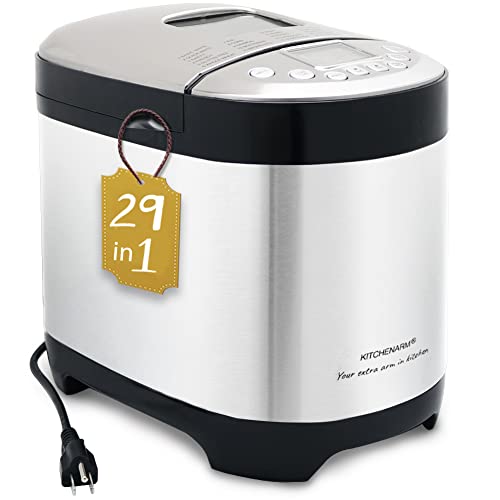
The Briskind model offers a compact footprint with broad versatility through 19 programmed settings. It supports a range of breads—from basic white to gluten-free—along with dough, jam, yogurt, and other options. Its 1.5-pound capacity makes it suitable for smaller households, while three crust colors and a keep-warm function add convenience. The package includes a non-stick bread pan, spare paddle, measuring cups and spoons, and a paddle-removal tool, helping new users start quickly and clean up easily.
Designed with simplicity in mind, Briskind emphasizes the “one-step” workflow: add ingredients, choose a menu, select loaf size, and press start. The built-in recipes and recipe book help beginners experiment with different textures and flavors, while still delivering consistent results. This model strikes a balance between program breadth and counter-space efficiency, making it a practical choice for apartments or small kitchens seeking variety without bulk.
Amazon Basics Two-Pound Programmable Bread Maker

The Amazon Basics bread maker focuses on reliable performance with a straightforward feature set. Its 550-watt motor powers automatic mixing, kneading, rising, and baking to produce up to a 2-pound loaf. An ExpressBake setting completes a loaf in under 90 minutes, making it an attractive option for fast weeknight breads. The non-stick interior simplifies cleanup, and the device’s overall simplicity makes it a solid choice for busy households that want dependable bread without a steep learning curve.
While the feature set is lean compared with premium models, essential functions are well-covered: programmable cycles for breads and doughs, a user-friendly LCD display, and a compact build that fits most kitchens. This machine is ideal for those who prioritize ease of use, speed, and consistent performance over a long list of specialty options or bells and whistles.
Neretva Twenty-In-One Bread Maker

The Neretva unit packs 20 automatic programs and three crust colors into a compact design, offering a broad spectrum of baking options from basic to gluten-free, savory doughs, jams, and yogurts. Loaf capacity options include 1.65 pounds and 2 pounds, catering to families of varying sizes. A standout feature is the dual-heater system with 360-degree coverage, which helps ensure even browning and thorough baking. The ceramic nonstick pan is easy to clean and free of harsh chemicals, contributing to healthier baking outcomes.
With a long, adjustable 15-hour delay timer and a 1-hour keep-warm function, this model accommodates early starts and late finishes without sacrificing loaf quality. The all-metal body adds durability, and the overall package suits households that value breadth of options and consistent texture across a wide range of recipes.
OSIPOTO Two-Pound Bread Machine

The OSIPOTO 2LB model emphasizes beginner-friendly operation with 17 customizable programs covering basics to specialized loaves, plus options like whole wheat, cake, jam, and yogurt. It supports three loaf sizes and three crust colors, enabling a wide range of results—from light sandwich bread to darker artisan loaves. A 15-hour delay timer helps plan breakfasts or late-night baking, and the design prioritizes quiet operation and easy cleanup. A stainless-steel exterior adds durability, while straightforward controls reduce the learning curve for new bakers.
For households that want dependable, flexible performance with minimal effort, OSIPOTO offers a compelling blend of program breadth and practical features. Its focus on ease of use, low noise, and manageability makes it a strong option for apartment living, shared kitchens, or busy homes where a small but capable bread maker is desirable.
Buying Guide
Capacity And loaf sizes
Choose capacity based on household size and baking habits. A one-pound model is ideal for individuals or couples who bake small portions, while a two-pound unit suits small families or multiple meals per week. Some machines offer multiple loaf sizes (1 lb, 1.5 lb, 2 lb), which adds flexibility for different recipes and portions. If you frequently bake for guests, prioritize models with larger capacity or flexible loaf size options.
Programs and customization
Programs vary widely. Look for a core set of breads (white, whole wheat, French) plus specialized options (gluten-free, dough, jam, yogurt). Some machines offer “home-made” or one-touch preset memory for your favorite recipes. The more programs a unit has, the more versatility you gain—especially if you enjoy experimenting with different doughs and flavor profiles. Consider whether you value a one-press start, a memory function, or a dedicated keep-warm feature for flexibility.
Delay timer and scheduling
A delay timer lets you plan fresh bread around your schedule. Typical ranges span from 6 to 15 hours. If you prefer waking to warm bread or want to start a loaf before leaving for work, a longer delay timer increases convenience. Also check whether the timer affects loaf quality and whether you can pause or resume cycles if plans change.
Ease of use and maintenance
Look for an intuitive control panel, clear LCD readouts, and straightforward button layouts. Nonstick pans simplify cleanup, while ceramic nonstick options can be healthier and easier to wash but may require gentler care. Consider noise level if the machine will run near bedrooms or study areas. Also assess whether the exterior and interior materials feel sturdy and long-lasting, especially in compact models that endure frequent use.
Build quality and safety
Stainless steel and metal-bodied machines tend to offer better durability than lightweight plastics. Features such as overheating protection, automatic shut-off, and secure lid closures add peace of mind for busy kitchens. If you value longevity, inspect warranty terms and the availability of replacement parts or customer service support in your region.
Price and value
Balance price against features, capacity, and program breadth. A model with more presets and a larger loaf capacity may justify a higher price for frequent bakers, while a simpler unit can be perfect for occasional use. Consider how often you will use the extra features and whether the extra cost aligns with your baking goals.
Additional considerations
If counter space is at a premium, prioritize compact footprints and light-weight designs. For households that dislike baking odors lingering in the kitchen, look for models with quiet operation and well-sealed lids. Also consider accessory availability, such as extra paddles or pans, and whether the manufacturer offers recipe books or online resources to expand your repertoire.