Best Paints for Concrete Foundations and Basement Waterproofing
Choosing the right coating for a concrete foundation is essential to prevent leaks, control moisture, and protect structural integrity in basements and crawl spaces. The products below represent a mix of flexible sealants, elastomeric coatings, and durable paints designed for indoor and outdoor use on concrete foundations. This guide highlights five options with proven performance for foundation projects, along with a quick product snapshot and practical usage tips.
For quick comparison, the table below summarizes the five selected products, highlighting their type and primary benefit for foundation work.
| Product | Brand | Type | Key Benefit |
|---|---|---|---|
| Liquid Rubber Foundation Repair Sealant | Liquid Rubber | Waterproof Sealant | 900% elongation; basement waterproofing |
| Ames Block & Wall Liquid Rubber Waterproofer | AMES | Waterproof Coating | White coating for foundations and basements |
| Black Concrete Foundation Sealant | ShangTianFeng | Sealant | Multi-surface repair; 16 sq ft per 32 oz |
| Liquid Rubber Color Waterproof Sealant | Liquid Rubber | Elastomeric Sealant | Flexible membrane for foundations and more |
| Rust-Oleum Concrete & Garage Floor Paint | Rust-Oleum | Floor Paint / Primer | One-part epoxy acrylic; durable finish |
Liquid Rubber Foundation Repair Sealant

Liquid Rubber’s foundation sealer is designed to form a permanent waterproof membrane suitable for basement waterproofing, foundation leak repair, shower liners, and planter boxes. The product highlights 900% elongation, delivering superior flexibility that accommodates temperature changes and settling without cracking. This performance helps prevent future water intrusion by maintaining a robust barrier against moisture.
Described as a complete basement waterproofing system beyond typical concrete paint or standard sealants, it aims to seal active leaks and moisture on foundation walls. It works with self-leveling concrete applications and adheres to concrete, masonry, wood, and metal surfaces. This versatility makes it suitable for various DIY foundation projects, including crack filling and protective coatings on multiple substrates.
When applying, prepare a clean, dry surface and follow the manufacturer’s guidance on curing times. The product is especially relevant for basements, crawl spaces, and other enclosed areas where moisture is a primary concern. Its flexible membrane is designed to resist temperature-related movement, helping maintain long-term protection against water damage.
Ames Block & Wall Liquid Rubber Waterproofer
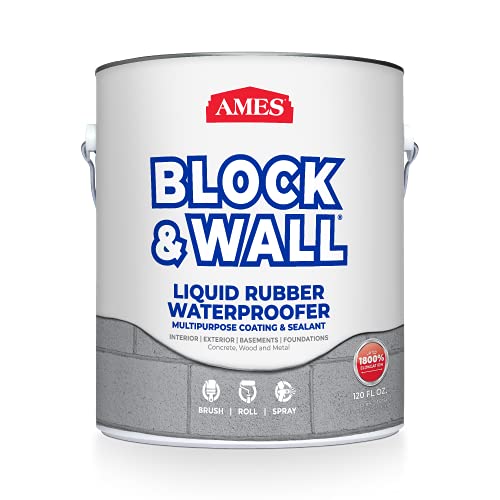
Ames Block & Wall Liquid Rubber Waterproofer is a white, slightly viscous coating designed for waterproofing foundations and basement walls. The listing notes an item weight of 9.25 pounds and origin from China, with a white finish. This product provides a flexible waterproof layer intended to protect concrete surfaces from moisture intrusion and related damage in below-ground environments.
As a one-coat solution, it can serve as a base coating on concrete or masonry surfaces that require moisture protection. While the product is marketed for block and wall applications, its waterproofing properties can help reduce dampness and efflorescence on foundation walls when properly applied to clean, dry surfaces. Users should follow surface preparation steps and allow appropriate cure time to achieve the full protective effect.
Black Concrete Foundation Sealant

Black Concrete Foundation and Basement Sealant provides a liquid waterproof sealant with coverage estimates of approximately 16 square feet per 32-ounce container. The application guideline suggests applying three thick layers with short waits between coats, and a longer interval in rainy conditions, to ensure adhesion and waterproof performance. The product is described as capable of repairing holes, cracks, crevices, tears, and leaks, forming a protective waterproofing layer for surrounding areas.
Its multi-surface capabilities extend beyond foundations to include roof lines, exterior walls, and other structural surfaces. This flexibility makes it suitable for DIY projects that target basement leaks or foundation protection, especially in areas where multiple substrate types are present. As with any sealant, proper surface preparation and ventilation improve results and longevity.
Liquid Rubber Color Waterproof Sealant

Liquid Rubber Color Waterproof Sealant is a beige elastomeric coating designed to seal and protect multiple surfaces, including metal roofs, flat roofs, gutters, concrete repair areas, and foundations. It creates a flexible, seamless waterproof membrane that resists leaks and water damage. The product emphasizes five times greater flexibility than conventional coatings, making it well-suited for surfaces subject to movement and temperature fluctuations.
The application guidance notes two to three heavy coats for vertical surfaces and three to four coats for flat roofs, with a typical drying window that enables faster project progression. This coating pairs well with foundation work where a durable, elastic barrier helps accommodate settling and minor shifts without cracking or losing adhesion.
Rust-Oleum Concrete & Garage Floor Paint

Rust-Oleum 320172 Concrete & Garage Floor Paint is a 1-part epoxy acrylic coating designed for concrete floors and garages, delivering UV and weather resistance for outdoor performance. The satin finish provides a durable, attractive surface suitable for high-traffic areas. While primarily marketed for floors, this coating can be part of a foundation finishing strategy to improve abrasion resistance and surface aesthetics on exposed concrete surfaces in basements or attached garages.
The product’s simple application makes it a practical option for DIY projects, especially when a fast-drying, durable floor finish is needed. Users should follow surface preparation steps, apply under appropriate temperatures, and ensure proper ventilation during application and curing to maximize longevity and performance of the coating on concrete substrates.
Buying Guide
Surface Condition And Preparation
Before selecting a foundation coating, inspect for active leaks, moisture intrusion, and visible cracks. Moisture presence can affect adhesion; porous surfaces may require priming or cleaning. For best results, remove loose material, clean oil or grease, and allow surfaces to dry completely. Moisture meters can help determine if basement walls or floors are ready for coatings or sealants. Proper preparation ensures the coating bonds effectively and lasts longer in challenging foundation environments.
Sealant vs Coat: Choosing The Right Type
Foundation projects typically involve two main categories: sealants and coatings. Sealants (like the Liquid Rubber options) form flexible barriers that block water and seal cracks, joints, and penetrations. Coatings (such as the Rust-Oleum floor paint) provide a protective surface with improved durability and aesthetics. For active leaks, a high-elasticity sealant is often preferred. For finished or visible areas, a durable coating with a suitable finish may be desirable. In many cases, a combination approach yields the best long-term protection.
Elasticity, Adhesion, And Temperature Tolerance
Elastomeric sealants offer movement tolerance and crack-bridging capabilities, which is important on foundations subject to shifting or temperature-driven expansion and contraction. A product with high elongation (for example, hundreds of percent) tends to perform better over time in challenging environments. Adhesion to concrete, masonry, wood, and metal surfaces is critical; always verify compatibility with your substrate. Temperature range and cure time influence scheduling and project timing, especially in garages or outdoor foundations exposed to weather.
Indoor Vs. Outdoor And Exposure
Consider where the foundation work will occur. Indoor basements benefit from products with low odor and low VOCs, while outdoor foundations require UV resistance and weather durability. Some products are designed for multi-surface use, which adds versatility for basements that share walls with exterior elements. If moisture is a persistent issue, prioritize products marketed for waterproofing and moisture control rather than generic paints.
Coverage, Drying Time, And Application Method
Understanding coverage helps you estimate material needs based on surface area. Some coatings specify coverage per gallon, while others indicate square footage per container, depending on coats and surface porosity. Application methods vary—from brushes and rollers to spray systems—so choose a product compatible with your experience and equipment. Drying and cure times affect scheduling; plan for several hours to days, depending on temperature, humidity, and product instructions.
Color, Aesthetics, And Maintenance
Foundation coatings and sealants come in various finishes and colors. While color is often a cosmetic choice, it can influence how moisture and staining are perceived on visible surfaces. Maintenance considerations include ease of cleaning, resistance to detergents, and the potential need for re-application over time. If aesthetics matter for exposed walls, select products that align with your design goals while providing robust protection.
Warranty, Safety, And Compliance
Check product warranties and safety data sheets to understand coverage terms and health considerations. Some coatings have stronger VOC profiles or specific ventilation requirements. Ensure proper personal protective equipment during application. For finished basements or living spaces, prioritize products with low odor and safe indoor use. When in doubt, consult manufacturer guidelines or a building professional to match the product with your foundation’s needs.