In this guide
- Paint On Screen Projector Paint
- Projector Screen Paint – 4K/8K Ultra White
- Smarter Surfaces Whiteboard Projector Paint
- Elite Screens Sable Frame 120-Inch Fixed Frame
- INSL-X Color-Changing Acrylic Ceiling Paint
- Buying Guide
- Should You Use Paint Or A Traditional Screen?
- Color And Finish Matters
- Coverage, Durability, And Prep
- 4K/8K Compatibility And Brightness
- Primer, Drying Time, And Application
- Space Considerations And Ambient Light
- Budget And Longevity
- Perspective And Use Case
- Summary Of Options
Choosing the right paint color and finish can significantly improve the clarity and contrast of a home theater setup that relies on a projector. White and near-white paint options designed for screen performance convert ordinary walls into high-quality projection surfaces, often with lower cost and simpler setup than traditional screens. This guide focuses on paint-based solutions that optimize brightness, color accuracy, and image sharpness for everyday rooms. It compares dedicated projector paints, whiteboard projector paints, and fixed-frame screen options to help you pick the best fit for your space and projector type.
| Product | Brand | Surface Type | Best Use |
|---|---|---|---|
| Paint On Screen Projector Paint | Paint on Screen | Wall / Surface Paint | Single-coat projection on any wall or ceiling |
| Projector Screen Paint – 4K/8K Ultra White | Digital Image Screen Paint | Wall Paint | High-definition projection on painted walls |
| Smarter Surfaces Whiteboard Projector Paint | SmarterSurfaces | Wall Paint with Whiteboard Finish | Wall-ready projector surface with dry-erase capability |
| Elite Screens Sable Frame 120” Fixed Frame | Elite Screens | Fixed-frame screen (not paint) | Premium screen surface for 4K/8K viewing |
| INSL-X Color-Changing Acrylic Ceiling Paint | INSL-X | Ceiling Paint | Color-changing ceiling coating |
Paint On Screen Projector Paint

Paint On Screen is designed to turn any surface into a projection screen with a single-coat application. The product is marketed for home use, promising crisp 1080p HD and 4K UHD clarity on walls and other surfaces. The formula is described as suitable for indoor environments and able to deliver a bright, even image when paired with a compatible projector. This option is especially appealing for renters or spaces where a fixed screen is impractical, or for those who want a large, seamless viewing surface without mounting a dedicated screen.
Key considerations include the brightness the wall can reflect and the wall’s existing color. The paint emphasizes a digital theater white result that aims to maximize light output while keeping shadows and hot spots to a minimum. Home theater setups benefit from a well-prepared surface—clean, smooth, and free of blemishes—to achieve the best results from a single coat. For best performance, follow manufacturer guidelines for surface preparation and curing time before calibrating your projector’s brightness and color settings.
- Turns most surfaces into a high-quality projection screen with a single coat.
- Optimized for 1080p and 4K viewing with a white, neutral finish.
- Suitable for indoor walls, ceilings, and other flat surfaces.
Projector Screen Paint – 4K/8K Ultra White

This product emphasizes ultra-white projection surfaces designed to support high-resolution content. A gallon covers up to 160 square feet and includes two coats, which helps create a uniform, smooth screen area with strong brightness and color accuracy. It’s positioned as a wall-friendly alternative to fabric screens, blending with decor while providing a dedicated projection surface. The paint is described as washable and repairable, offering durability for busy spaces or rooms used by families and guests.
For best results, plan for thorough surface preparation and consistent application. The product aims to reduce visible texture and color variations on the wall, helping mitigate ambient light reflections that can wash out images. It’s particularly suitable for rooms where a large, fixed screen is desired without installing a traditional screen frame, while still accommodating 4K content with adequate brightness and contrast.
- Gallon coverage around 160 sq ft with 2 coats included
- High-definition 4K/8K ready ultra-white finish
- Washable and repairable surface that blends with decor
Smarter Surfaces Whiteboard Projector Paint

Smarter Surfaces Whiteboard Projector Paint turns a smooth wall into a high-performance projection surface with a whiteboard finish. The kit is designed for indoor use and supports 4K projections, making it a practical option for classrooms and home offices as well as living rooms. The surface can be painted directly, with primer recommended only if the underlying surface is bare or untreated. The process typically requires two coats of primer plus one coat of the whiteboard paint and reaches readiness in about four days.
Key attributes include a gain value of 1.3, which helps maintain brightness in rooms with varying ambient light. The surface works with most projectors, including interactive and standard models, and is compatible with plaster, drywall, wood, metal, and concrete. While it doubles as a projection surface, it also offers dry-erase functionality, making it suitable for collaboration areas or multi-use spaces where notes and drawings are frequent.
- Transforms walls into a projection surface with whiteboard capability
- Primer required only for bare or untreated surfaces
- Ready in about four days; supports 4K projections
- Compatible with most room textures and projector types
Elite Screens Sable Frame 120-Inch Fixed Frame

The Elite Screens Sable Frame is a premium fixed-frame projection screen designed for dedicated home theaters and professional spaces. The 120-inch, 16:9 screen uses CineWhite UHD-B material with a 1.3 gain and is ISF-certified for accurate color reproduction, ensuring vibrant, true-to-life visuals. The surface supports 4K Ultra HD and Active 3D projection with a wide 180-degree viewing angle. A fully black-backed surface reduces light penetration to boost contrast, and the aluminum frame is wrapped in black velvet to minimize overshoot and deliver a clean, professional appearance.
This option is well-suited for users who want a wall-mounted, permanent screen that delivers reliable brightness and color accuracy across various projector types, including standard, short throw, and ultra-short throw models. The design emphasizes ease of cleaning and a robust frame, making it ideal for home theaters, media rooms, or small venues where image quality and consistency are a priority.
- 120-inch wall-mounted screen with 16:9 aspect ratio
- ISF Certified CineWhite UHD-B surface with 1.3 gain
- Supports 4K/Ultra HD, 3D, and wide viewing angles
- Black backing minimizes light bleed; simple frame assembly
INSL-X Color-Changing Acrylic Ceiling Paint
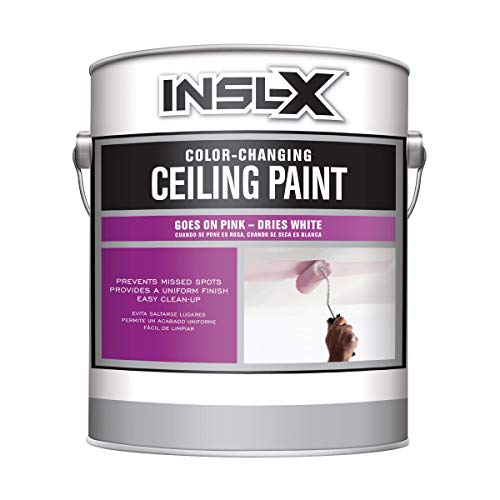
INSL-X Color-Changing Acrylic Ceiling Paint is a ceiling coating featuring disappearing color-change technology to help ensure even application. This product is applied as ceiling paint and is noted for being easy to apply, reducing missed spots. It’s formulated for smooth and textured ceilings and is primarily intended for ceiling surfaces rather than wall projection surfaces. While not a dedicated projection_surface paint, it can be part of a broader room renovation where ceilings require a color-change feature before final wall finishes are applied.
For projector wall applications, this product is less directly relevant, but it can be used in spaces where you are repainting a ceiling to reduce glare or to create a consistent ambient environment before applying projection-friendly wall finishes. When considering projection-ready walls, focus on paints designed for walls or screens to maximize brightness, accuracy, and surface uniformity.
- Disappearing pink color-change technology to avoid missed spots
- Easy application for smooth or textured ceilings
- Ceiling-focused, not a projection surface paint for walls
Buying Guide
Should You Use Paint Or A Traditional Screen?
Paint-based projection surfaces offer flexibility and lower upfront costs, especially for large walls or irregular spaces. Traditional screens, including fixed-frame options, provide reliable brightness and pixel accuracy but require installation space and a fixed location. If you value a seamless wall or budget constraints, high-quality projector paints and whiteboard paints can be attractive alternatives. However, for the sharpest precision and minimal image distortion in bright rooms, a fixed-frame screen remains the gold standard.
Color And Finish Matters
Walls painted bright white or slightly warm white reflect more light, while gray or darker tones can reduce image brightness and contrast. Projection-specific paints usually emphasize a neutral white tone designed to support color accuracy and brightness. Matte finishes help minimize reflections and hotspots, whereas glossier finishes can cause glare. The best choice balances brightness with ambient-light management and room decor.
Coverage, Durability, And Prep
Paint-and-surface options vary in their coverage and preparation needs. Some paints require primer for bare surfaces or textured walls, while others claim a straightforward, no-primer application. Durability matters in high-traffic rooms or spaces with children and pets; washable surfaces are advantageous for ongoing maintenance. Proper surface preparation—cleaning, smoothing, and removing imperfections—will significantly improve projection quality and paint longevity.
4K/8K Compatibility And Brightness
High-resolution content demands adequate brightness and color fidelity. Look for paints and screen products marketed as compatible with 4K/8K content, and consider the wall’s reflectivity and ambient light. Ultra-white or near-white finishes tend to maximize brightness, but their performance depends on projector brightness (ANSI lumens) and room lighting. If your projector struggles in ambient light, investing in a material with higher gain and a darker backing can help preserve contrast.
Primer, Drying Time, And Application
Some products require a primer, while others are ready-to-use after a single or two coats. Drying time affects when you can calibrate your projector and start using the space. For walls that are already painted or well-prepared, a 24–48 hour curing window usually suffices before final projectors alignment. For whiteboard or interactive surfaces, ensure you follow the specified primer and coating sequence to preserve the surface’s writing capability and projection clarity.
Space Considerations And Ambient Light
Room layout, window placement, and light sources all influence performance. In bright rooms, higher-gain projection surfaces can improve perceived brightness but may reduce viewing angle slightly. In darker rooms, standard white projection paints provide ample brightness with careful projector calibration. If you cannot control ambient light, consider combining wall paints with room-darkening window treatments or dedicated drapes to maintain image quality.
Budget And Longevity
Budget varies by product type. Dedicated screen surfaces can be pricier upfront but may deliver more consistent results across a wide viewing angle. Paint-based options are typically less expensive per square foot and easier to refresh. Factor in maintenance costs such as re-painting and potential repairs, especially in rooms with heavy use. A robust, well-prepared wall surface can last many years with periodic touch-ups.
Perspective And Use Case
For multi-use spaces (home offices, classrooms, living rooms), whiteboard projector paints provide the added benefit of dry-erase functionality, enabling note-taking and collaboration. Fixed-frame screens excel in dedicated theater rooms where viewing position is fixed, brightness is high, and color reproduction must be precise. Consider your room’s purpose, furniture arrangement, and whether you prefer a wall-as-screen approach or a fixed projection surface.
Summary Of Options
Bottom line: If you want maximum flexibility and a lower-cost approach, try a high-quality projector paint or whiteboard projection paint on your wall. If you want the most consistent, theater-grade image with minimal glare and precise geometry, a fixed-frame screen remains the strongest choice. For those blending aesthetics with performance, a premium surface like CineWhite or ISF-certified screens may be worth the investment, especially in rooms dedicated to cinema-quality viewing.