Best Non-Stick Loaf Pan for Easy Release and Even Baking
Choosing a non-stick loaf pan simplifies baking and cleanup. The right pan distributes heat evenly, releases loaves cleanly, and withstands frequent use. This guide reviews five dependable options and outlines key factors to consider before you buy.
Below you will find a quick product table and detailed sections to help you pick the best loaf pan for home bakers, from compact ovens to full-size batches.
| Product | Brand | Size | Key Feature |
|---|---|---|---|
| Cuisinart 9-Inch Chef’s Classic Nonstick Bakeware Loaf Pan | Cuisinart | 9-Inch | Heavy gauge aluminized steel; Whitford Xylan non-stick; rolled edges |
| OXO Good Grips Non-Stick Pro Ceramic Coated Loaf Pan | OXO | 1Lb | Ceramic coating; rounded interior corners; easy handling |
| Wilton Platinum Premium Non-Stick Loaf Pan | Wilton | 9 x 5 x 2.7 in | Platinum non-stick; PFAS-free; oven safe to 450°F |
| Amazon Basics Rectangular Bread Loaf Pan Set | Amazon Basics | 9.5 x 5 in | Set of 2; heavy-weight steel; nonstick; oven-safe to 428°F |
| USA Pan Nonstick Standard Bread Loaf Pan | USA Pan | 8.5 x 4.5 x 2.75 in | Corrugated surface; silicone non-stick coating |
Cuisinart 9-Inch Nonstick Loaf Pan

Constructed with heavy-gauge 1-mm aluminized steel, this pan provides even heating across the loaf. The interior and exterior feature Whitford Xylan non-stick coating, enabling effortless release and easy cleanup. Thick rolled edges help prevent warping during high-heat baking or heavy use, preserving shape and performance over time. This combination suits bread, meatloaf, and pound cake recipes, delivering reliable browning and clean cuts after slicing.
OXO Good Grips Ceramic Loaf Pan

The OXO loaf pan blends heavy-gauge aluminized steel with a ceramic non-stick coating. The ceramic coating releases food easily while resisting scratching, staining, corrosion, and abrasion. Rounded interior corners simplify cleaning, and expanded rim handles provide confident handling when loading or removing the pan from the oven. This design is well-suited for everyday baking and for cooks who want long-lasting performance with a clean release.
Wilton Platinum Premium Loaf Pan

This platinum loaf pan is designed for professional bakers, featuring durable anodized aluminum for strength and precise heat distribution. It offers platinum non-stick performance and is oven safe up to 450°F. Free from PFAS, this pan supports toxin-free cooking and reliable release for uniform browning and effortless decorating.
Amazon Basics Rectangular Loaf Pan Set

This budget-friendly option offers a set of two rectangular loaf pans in a durable heavy-weight steel construction. The nonstick coating supports easy food release and cleanup, while alloy rigidity ensures fast, even heating for uniform browning. Oven-safe to 428°F, these pans are practical for frequent bakers who want value plus dependable performance.
USA Pan Nonstick Standard Bread Loaf Pan
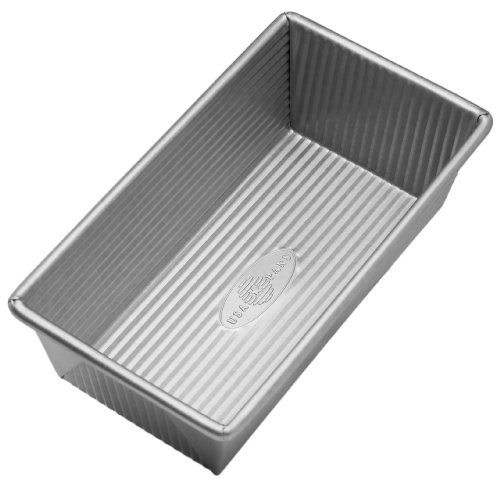
USA Pan’s standard loaf pan uses aluminized steel with a distinctive corrugated surface to strengthen the pan and improve air circulation for even baking and quick release. The silicone non-stick coating ensures easy release and simple cleanup, making it a reliable workhorse for quick breads, yeast breads, and pound cakes.
Buying Guide
Choosing the right loaf pan involves weighing material, coating, size, and intended use. The following considerations help compare options across the market.
- Material and construction
- Aluminized steel pans offer strong heat distribution and warp resistance, especially with thick rims. Carbon steel is similar but may require more care to prevent corrosion.
- Firm, durable pans with reinforced edges hold their shape through multiple bakes.
- Non-stick coatings
- PTFE-based coatings (often marketed as non-stick) release food easily but may require careful care to extend life.
- Ceramic coatings can resist scratching and staining and may offer a different release experience.
- PFAS-free options reduce concerns about potentially harmful chemicals in cookware.
- Size and capacity
- Standard loaves typically use 9 x 5 inches. Some pans are slightly smaller (8.5 x 4.5) or longer (9.5 x 5) for different loaf shapes.
- Consider the volume of your usual recipes and your oven’s capacity when selecting a set or single pan.
- Durability and warp resistance
- Pans with thick rims, rolled edges, or corrugated bottoms resist warping and help maintain even heat.
- Nonstick coatings should be rated for the oven temperatures you use most.
- Care and maintenance
- Some pans are dishwasher-safe, but hand washing often prolongs coating life. Follow manufacturer instructions.
- Avoid metal utensils that might scratch non-stick surfaces.
- Usage scenarios
- Bread, pound cake, meatloaf, and even small loaves benefit from a reliable non-stick pan.
- Professional-grade pans may offer more uniform browning and easy release for elaborate decorating.
Overall, choose a pan that aligns with your bake volume, oven size, and preferred coating. If you bake frequently, a heavy-gauge pan with a solid non-stick finish and a reinforced rim tends to deliver the most consistent results with easy release and cleanup. For budget-conscious households, a two-pack can provide flexibility for different recipes or larger batches, while still maintaining reliable performance.