In this guide
Choosing a mirror tint for house windows involves balancing daytime privacy, heat rejection, and interior comfort. The following five products reflect popular options for homeowners seeking a reflective, one-way look that enhances energy efficiency without sacrificing visibility during the day. They range from adhesive films to adhesive-free options, covering a variety of window sizes and installation preferences. Use this guide to compare privacy performance, heat control, and nighttime limitations so you can pick the right film for your home’s energy needs and design style.
| Product | Brand | Key Benefit |
|---|---|---|
| BDF S05 Window Film Daytime Privacy and Heat Control Mirror Silver 5 (Very Dark) – 36in X 12ft | BDF | Very dark daytime privacy with mirror finish and UV protection; strong adhesive |
| Volcanics One Way Window Privacy Film with Installation Tools, Silver | Volcanics | Adhesive-free, quick install; easy removal and reuse; daytime privacy |
| rabbitgoo Window Privacy Film One Way Window Tint for Home | rabbitgoo | Non-adhesive, static cling; high heat reflection and UV protection; renter-friendly |
| FILMGOO One Way Privacy Window Film Mirror Window Tint for Home Daytime Privacy | FILMGOO | Blocks infrared and UV; easy static-cling install; night reversal note |
| Gila Privacy Mirror Adhesive Residential DIY Window Film | Gila | Daytime privacy with mirrored exterior; strong UV protection; DIY friendly |
BDF S05 Mirror Window Film

The BDF S05 delivers excellent daytime privacy with a very dark, silver mirror finish that hides interior views when outside lighting is brighter. The effect is most pronounced in daylight, while at night the interior may become more visible if illumination inside is stronger. The film also helps reduce cooling costs through heat rejection and blocks about 99% of UV rays, protecting furnishings from sun fading. A strong adhesive under a release liner helps secure the film, and installing it typically requires a generous wetting solution to allow proper positioning before it sets.
Volcanics One Way Privacy Film

Volcanics offers an adhesive-free option that uses static cling for quick installation. It provides daytime privacy with a reflective finish while still allowing exterior visibility. The film can be removed without leaving residue and can often be reused on other windows. Note that at night, when interior lights are on, the mirror effect diminishes, so curtains or drapes may be needed for full privacy after dark.
rabbitgoo One Way Privacy Film

rabbitgoo’s window film provides heat control and energy savings by reflecting a large portion of infrared rays. It blocks up to 90% of UV rays and offers glare reduction, with 14% VLT to balance visible light and privacy. This film uses a non-adhesive static cling method, which means a mess-free installation and straightforward removal. It is particularly suited for renters or homeowners seeking an economical, temporary solution for room cooling and privacy.
FILMGOO One Way Privacy Window Film
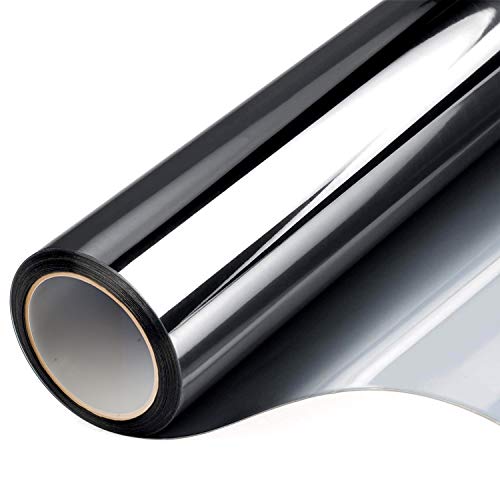
FILMGOO’s one-way privacy film blocks up to 85% of infrared rays and 96% of UV radiation, helping to keep interiors cooler and furnishings from fading. It provides daytime privacy while allowing outside visibility if exterior lighting is brighter. The film is designed as a static cling product—no adhesive means easier cleaning and removal, which is ideal for renters. Be aware that the mirror effect reverses at night, so curtains are recommended after dark.
Gila Privacy Mirror Film

Gila’s privacy mirror film provides daytime privacy with a mirrored exterior appearance while also delivering energy efficiency by rejecting solar heat and blocking up to 99% of UV rays. The product is designed for DIY installation and comes in a large format, typically 3 ft by 15 ft, to cover sizable panes. The film’s reflected look is best in bright daylight, and the privacy level decreases when interior lighting is stronger than outside after dark.
Buying Guide
Key considerations
- Privacy needs: Daytime-only privacy versus day-and-night privacy. Most mirror films rely on outside lighting; the interior may become visible at night if lights are on inside.
- Window type and framing: Some films are better suited for single-pane windows; others note limitations with dual-pane or certain glass types. Measure accurately and verify compatibility before purchasing.
- Adhesive vs. non-adhesive: Adhesive films tend to be more permanent and durable but harder to remove. Static cling options are easier to install on rental properties and are removable without residue; plan for reuse if needed.
- Heat rejection and UV protection: A primary benefit of mirror films is reducing heat gain and UV exposure to protect interiors, furnishings, and flooring. Check the stated percentages to fit your climate and interior needs.
- Light transmission and glare: A lower VLT (visible light transmission) provides greater privacy but reduces natural light. Balance privacy with indoor brightness to maintain comfortable living spaces.
- Installation complexity: Some products require extensive surface cleaning, water soaks, and careful squeegeeing. Others use no-adhesive, static cling methods that are simpler for DIY enthusiasts.
- Nighttime considerations: The mirror effect often reverses when interior lighting exceeds outside brightness. Plan for curtains or blinds to preserve privacy after dark if needed.
- Removal and durability: Adhesive films may leave residue or require solvents for removal. Non-adhesive options typically remove cleanly but may be less durable over long periods in sunny exposure.
- Maintenance and safety: Some films are designed with UV-blocking layers to protect interiors and prevent fading. Regular cleaning with non-abrasive cleaners helps maintain clarity and reduces scratches.
- Consider your climate and sun exposure: In hot climates, prioritizing heat rejection can significantly impact cooling costs and comfort. In cooler regions, glare reduction and daylighting can still improve indoor ambiance.
- Room-by-room planning: Start with rooms that receive the most sun or where glare is disruptive. You can apply films progressively to manage budget and installation effort.
Choosing the right mirror tint involves balancing privacy, heat control, and interior aesthetics. Whether you prefer an adhesive option for permanence or a static cling film for flexibility, align your choice with window type, climate, and daily lighting conditions to maximize comfort and energy efficiency in your home.