In this guide
Choosing the right light color for a bedroom can influence sleep quality and circadian rhythms. Warmer tones like amber and red are easier on the eyes at night, while overly bright or cool light may interfere with melatonin production. This article reviews five sleep-friendly lighting options designed to help you and your family sleep more deeply, with practical guidance on color, brightness, and usage in different room settings.
| Product | Brand | Light Type | Sleep Benefit |
|---|---|---|---|
| XKETA 670nm Red Night Light | XKETA | 670nm Red Night Light | Promotes melatonin, supports circadian rhythm, faster sleep onset |
| TORANKOS Very Dim Sleep Night Lights | TORANKOS | Very Dim Warm White | Unobtrusive glow, three color temps, touch dimming |
| YUNLEX Amber Night Light | YUNLEX | Amber Night Light | Indirect glow, dusk-to-dawn sensor support |
| DALUXshop Amber Sleep Light Bulbs | DALUXshop | Amber Sleep Bulbs (1800K) | Blue-light free, warm glow, eye-friendly |
| Dawnrise Night Lights | Dawnrise | RGB Color Changing | Multiple colors with auto on/off, dimmable |
670nm Red Night Light For Sleep
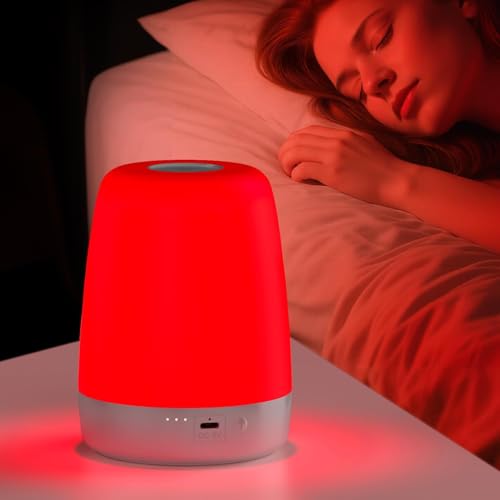
The XKETA night light uses a clinically studied 670nm red wavelength designed to mimic sunset light. This red light supports melatonin production, helping regulate the sleep-wake cycle and easing the transition to sleep. The circadian-friendly glow is gentle on sensitive eyes, reducing nighttime disruption for both adults and children. With a two-hour timer and cordless, compact design, it fits neatly on a nightstand and travels well for rooms across the home.
- 670nm wavelength aligns with melatonin production
- Two light modes and three brightness levels
- Two-hour timer; cordless, compact design
- Low-glare glow suitable for nighttime use
Very Dim Sleep Night Lights

These wall-plug night lights are designed to be unobtrusive while providing a soft, ambient glow. They offer three color temperatures and a touch-activated brightness control, making them ideal for late-night nursing, reading, or navigating a dark room without waking a sleeping partner. By keeping brightness at a comfortable low level, they help maintain a conducive sleep environment without harsh light exposure.
- Unobtrusive design reduces glare
- Three color temperatures for customization
- Touch dimming for easy adjustment
- Plug-in convenience for bedrooms and hallways
Amber Night Light For Sleep

YUNLEX delivers an amber-toned night light with a calming, indirect glow designed to minimize blue-light exposure. Its three brightness levels let you tailor illumination for bedtime routines or safe navigation in the dark. The dusk-to-dawn sensor automatically switches on as ambient light fades, ensuring a gentle night-time light without manual input, which is especially helpful for kids’ rooms and nurseries.
- Three brightness levels
- Gentle, indirect amber glow
- Dusk-to-dawn sensor for auto operation
- Two-pack for multiple rooms or family use
Amber Sleep Light Bulbs For Sleep

These amber light bulbs are designed to block blue light and emit a warm 1800K glow, promoting melatonin production and a calmer pre-sleep environment. The very low blue light output, coupled with soft, steady illumination, reduces eye strain and helps maintain a cozy, sleep-friendly mood. The bulbs are flicker-free with smooth, inviting light suitable for bedrooms, kids’ rooms, and living areas where sleep quality matters.
- Blue light-free; 1800K warmth
- Soft, flicker-free illumination
- Eye-friendly, calming glow
- Standard E26 base for easy replacement
Dawnrise Night Lights 12 RGB Modes

Dawnrise offers a 12-color RGB night light system with a dimmable, color-changing experience. While the spectrum can uplift mood and creativity, you can lock it to a steady warm amber or red to minimize stimulation before bed. The built-in light sensor enables automatic on/off, making it convenient for bedrooms, stairs, or hallways where nighttime lighting is needed without disrupting sleep cycles.
- 12 RGB color modes; dimmable
- Auto on/off with light sensor
- Remote control available for easy setup
- Color options suitable for ambiance or steady night light
Buying Guide
Key factors to consider when selecting sleep-friendly lighting include color temperature, brightness control, and automation. For most bedrooms, warmer colors in the amber to red range (around 1800–2700K) are preferable because they shift melatonin production toward the evening and reduce eye fatigue. Dim, indirect lighting helps when you’re moving around at night without fully waking your brain.
Brightness control matters, especially for households with multiple sleepers. Look for dimmable options, memory settings, or multiple brightness levels so you can tailor light intensity for reading, nursing, or slipping back to sleep quickly. Auto-on/auto-off features, like dusk-to-dawn sensors, minimize the need to operate lights during the night and support consistent sleep patterns.
Consider the type of light that best fits your room: plug-in night lights keep surfaces uncluttered, while bulbs with amber tones can be swapped into existing fixtures for a broader lighting strategy. For kids, stable color and gentle brightness reduce anxiety and help establish a predictable bedtime routine. If you enjoy color-changing ambiance, ensure there’s a mode that stays in a warm, sleep-friendly range instead of flashing or shifting late at night.
Energy efficiency and eye comfort are practical concerns. Flicker-free LEDs reduce eye strain, and diffusion helps avoid harsh hotspots. When shopping, verify that any RGB or color-changing options offer a steady warm setting suitable for sleep, plus a real dim mode for overnight use. Finally, consider whether you prefer cordless, rechargeable units or traditional plug-in designs for convenience and placement flexibility.
In sum, the best lighting for sleep combines a warm color palette, smooth brightness control, and dependable automation. The options above reflect a range of approaches—from single-color red or amber lights to versatile RGB systems—so you can pick what aligns with your bedtime rituals, room layout, and whether you’re lighting a nursery, a master suite, or a shared living space.