In this guide
- Qmark HBB2004 Hydronic Baseboard Heater
- Fahrenheat 500W Hydronic Baseboard Heater
- Dayton Hydronic Electric Baseboard Heater
- Cadet F Series 36-Inch Electric Baseboard Heater
- Cadet F Series 24-Inch Electric Baseboard Heater
- Buying Guide
- Hydronic vs. Electric Baseboard Heating
- Key specs to compare
- Sizing and placement considerations
- Safety and maintenance
- Smart thermostat integration
- Comparative snapshot
Choosing a hydronic or electric baseboard heater involves balancing heat delivery, quiet operation, and safety across different room sizes. This guide highlights five of the most relevant baseboard heaters available on Amazon, focusing on models that use hydronic heat or combine electric systems with quiet, fanless operation. The summary table below offers a quick reference to each model’s power, voltage, and a key advantage. Use this as a starting point to compare options for living rooms, bedrooms, or home offices.
| Product | Brand | Voltage / Power | Key Benefit |
|---|---|---|---|
| Qmark HBB2004 Liquid Filled Electric Hydronic Baseboard Heater | Marley | 240V, 2000W | Consistent heat, heat retention, fanless operation |
| 500W 208/240V Hard Wired Electric Hydronic Baseboard Heater | Fahrenheat | 208/240V, 500W | Quiet, allergen-friendly, overheat protection |
| Dayton Hydronic Electric Baseboard Heater | CAI – DAYTON | 208/240VAC | Commercial hydronic design, conventional housing |
| Cadet F Series 36″ Electric Baseboard Heater (3F750-1W) | Cadet | 120V, 750W | All-metal build, requires thermostat |
| Cadet F Series 24″ Electric Baseboard Heater (2F350W) | Cadet | 240/208V, 350W (262W) | Compact, steel construction, economical option |
Qmark HBB2004 Hydronic Baseboard Heater

The Qmark HBB2004 uses a liquid-immersed heating element to deliver steady warmth with minimal temperature swings. As a hydronic design, it retains heat, helping maintain comfort even after the unit cycles off. This model operates without a fan, relying on natural convection to distribute heat evenly across the room.
Designed for safe placement on flooring, tile, or carpet, the heater emphasizes safety with a thermal cutoff to prevent overheating. At 2000 watts on a 240-volt supply, it suits medium-to-large spaces where continuous, quiet heat is desirable. For best results, pair with a compatible thermostat and ensure a dedicated circuit to maximize performance.
Fahrenheat 500W Hydronic Baseboard Heater
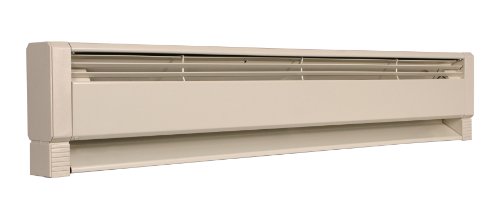
This 500W hydronic baseboard heater operates at 208/240V and uses a convection approach without a blower. The fanless design helps keep dust and allergens from circulating, making it suitable for allergy-sensitive spaces. The unit’s overheat protection guards against blocked air intakes or poor airflow, offering a safer heating option for homes and offices.
The model’s hydronic core provides steady warmth with minimal noise, making it a good choice for bedrooms, living rooms, or home offices where quiet operation matters. Proper installation and a suitable thermostat will help regulate comfort efficiently in rooms of moderate size.
Dayton Hydronic Electric Baseboard Heater

Dayton’s hydronic baseboard heater is listed for commercial use with a conventional housing style. It operates as a hydronic electric baseboard heater, designed to fit spaces that favor a robust, simple heating solution. The model supports 208/240VAC and is aligned with typical commercial electrical configurations, offering reliable heat delivery for office suites, shops, or larger rooms requiring longer run lengths.
With its conventional housing and hydronic core, this heater prioritizes durability and even heat distribution. For installation, ensure proper clearance, circuit capacity, and thermostat compatibility to achieve steady warmth across the occupied space while minimizing audible disturbances.
Cadet F Series 36-Inch Electric Baseboard Heater
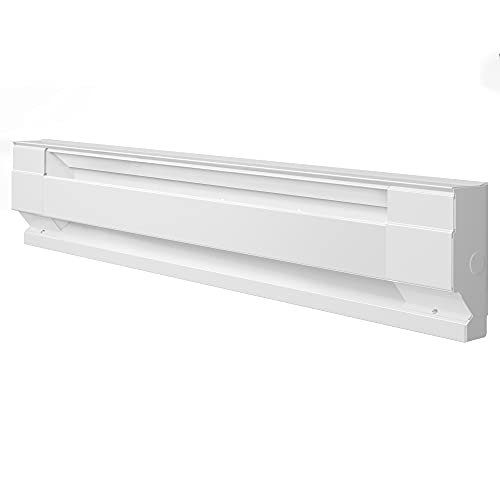
The Cadet F Series 36″ model (3F750-1W) is a 750-watt heater designed for 120-volt circuits. The unit emphasizes a sturdy, all-metal construction with a 25-gauge steel housing and a 20-gauge ground-equipped junction box, finished in powder coating for durability. Although it requires a thermostat, this heater contributes predictable, linear heat in medium-to-large bedrooms or living areas when paired with a compatible temperature control system.
The 36-inch length provides a broad heating area, and the 750W output supports moderate room sizes when carefully matched with the space’s heat loss. As with other baseboards, proper mounting height, clearance, and wiring are essential to safe operation and efficient heating performance.
Cadet F Series 24-Inch Electric Baseboard Heater
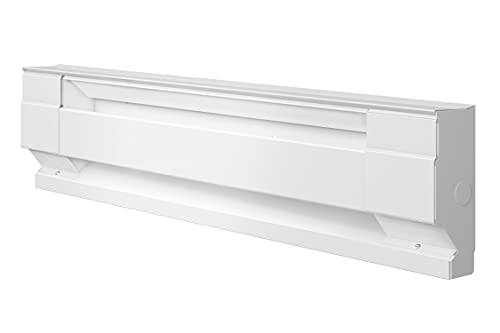
The Cadet F Series 24″ model (2F350W) offers a compact electric heating option, rated for 240/208V and delivering 350W (or 262W at the higher voltage). Its white steel finish blends with most interior décors, and the unit is built with straightforward electrical installation in mind. This size is well-suited to smaller rooms, hallways, or zones within larger spaces where targeted heating is beneficial.
As with Cadet’s 36″ model, a thermostat and proper wiring are essential for effective temperature control. The steel construction and powder-coated finish provide durability, while the electrical rating supports flexible installation in homes and light commercial settings alike.
Buying Guide
Hydronic vs. Electric Baseboard Heating
Hydronic baseboard heaters use a liquid-filled core to transfer heat, typically delivering smooth, uniform warmth and good heat retention. They tend to run quietly and can feel warmer to the touch in some cases due to the liquid medium. Electric baseboard heaters rely on electric coils or elements and can heat quickly, but may require careful sizing to avoid short cycles. For spaces where quiet operation and steady temperatures matter, hydronic models are often preferred; for fast warm-up in smaller or irregular spaces, electric units can be effective.
Key specs to compare
Important specifications include wattage, voltage, and the heater’s physical length. Higher wattage generally means larger space coverage, but the same unit may perform differently depending on insulation and room layout. Gauge of metal, presence of a thermostat, and whether the unit includes overheat protection or other safety features are also critical. When possible, match the heater’s capacity to the room’s heat loss for efficient performance.
Sizing and placement considerations
Measure the room and compare to the heater’s BTU or wattage rating to avoid under- or over-heating. Baseboard heaters should run along walls with adequate clearance and away from obstructions. For hydronic models, ensure the surrounding flooring or carpet is compatible with heat exposure, and for electric models, verify that your wiring and circuit can handle the load. Longer units can distribute heat more evenly across larger spaces but may require multiple units for even coverage.
Safety and maintenance
Most modern baseboard heaters include thermal cutoffs or overheat protection. Fanless designs reduce dust, noise, and drafts, contributing to healthier indoor air. Regular cleaning to remove dust and debris helps maintain efficiency. Check that endcaps, housings, and wiring are intact and comply with local electrical codes. If you are upgrading or replacing covers or housings (as with some Cadet models), ensure compatibility with existing elements and proper clearance to prevent heat buildup.
Smart thermostat integration
Smart thermostats designed for high-voltage baseboard systems can optimize energy use by learning occupancy patterns and adjusting temperatures remotely. When selecting a smart control, verify compatibility with your heater’s voltage (120V vs. 208/240V) and the required wiring (neutral or additional live wire may be necessary). Some units offer adaptive display technology and remote monitoring, which can improve comfort and savings with hydronic and electric baseboard setups alike.
Comparative snapshot
Hydronic models from this selection (Qmark, Fahrenheat, Dayton) emphasize quiet operation and heat retention, suitable for bedrooms and living rooms where long-term comfort matters. Cadet electric baseboards offer compact, affordable options with straightforward installation for various room sizes. When choosing, consider room size, insulation quality, existing thermostats, and whether you prefer slower, steadier warmth or rapid temperature changes. A balanced mix of unit length and wattage often yields the most consistent day-to-day comfort across different seasons.