Best Gas Tank Water Heaters for Home Use
Gas-powered water heaters offer fast, reliable hot water with impressive flow, and options range from compact tankless models to rugged RV tanks. This guide spotlights five popular gas-fired units available on Amazon, spanning indoor tankless systems for homes and compact tanks for RV use. Each product delivers dependable hot water, with different flow rates, BTU ratings, and venting needs to fit varied homes and lifestyles. The table below presents quick comparisons to help you identify the best match for your family size, space, and fuel availability. Always consult local codes and a licensed installer for proper setup.
| Product | Brand | Type | Max Flow / Capacity | Notable Feature |
|---|---|---|---|---|
| Ranein Natural Gas Tankless Water Heater | Ranein | Tankless | 3.6 GPM / 80,000 BTU | Four modes; compact indoor unit |
| NEW Rinnai RX199iN Condensing | Rinnai | Tankless | Up to 11.1 GPM / 199,000 BTU | Indoor/Outdoor; Versa Vent; Smart Sense |
| GASLAND Gasmart E | GASLAND | Tankless | Up to 7.6 GPM / 199,000 BTU | UEF 0.8; indoor; compact design |
| FOGATTI InstaGas Comfort 170 Series | FOGATTI | Tankless | Up to 7.5 GPM / 170,000 BTU | Four-stage combustion; quiet operation |
| Suburban Advantage SW6DE | Suburban | Tank | 6 gal tank | Porcelain-lined; replaceable anode rod |
Ranein Gas Tankless Water Heater

The Ranein Natural Gas Tankless Water Heater delivers on-demand hot water with up to 80,000 BTU and a maximum flow of 3.6 GPM. Designed for indoor installation, it serves 2–3 fixtures such as a bathroom, kitchen sink, and compact bar area. With tankless operation, hot water is produced instantly as demand arises, eliminating the standby heat loss and the long preheat time of storage tanks. The unit’s compact footprint makes it suitable for utility closets and tight laundry spaces, while still delivering dependable performance for moderate hot-water needs.
It offers four operating modes—Dish (100℉), Fruit (95℉), Elderly (104℉), and Infant (107℉)—to tailor water temperature for different tasks, adding convenience and energy efficiency. Installation requires proper venting, gas supply sizing, and a solid mounting surface. Routine flushing and annual maintenance help extend life and prevent mineral buildup. The 80,000 BTU input supports quick recovery during busy mornings, reducing wait times and enhancing everyday comfort.
NEW Rinnai RX199iN Condensing Tankless Water Heater

The NEW Rinnai RX199iN is a condensing gas tankless heater that can be installed indoors or outdoors thanks to Versa Vent and dual-fuel capability (natural gas or propane). It delivers up to 11.1 GPM and up to 199,000 BTU, making it capable of supporting multiple fixtures simultaneously in mid-to-large homes. Despite its power, the unit remains compact—roughly the size of a small suitcase—allowing discreet placement in closets, garages, or exterior walls. The RX199iN combines high flow with space-saving design for households seeking reliable hot water without a bulky storage tank.
Efficiency and features include Quick Flush for maintenance and a modern interface; a high energy-efficiency factor (UEF around 0.98). A ControlR module enables optional WiFi control (sold separately). Outdoor installations require the RX-OVC vent cap. As with other high-capacity gas systems, correct venting, gas sizing, and local code compliance are essential for safe, efficient operation.
GASLAND Gasmart E Tankless Water Heater
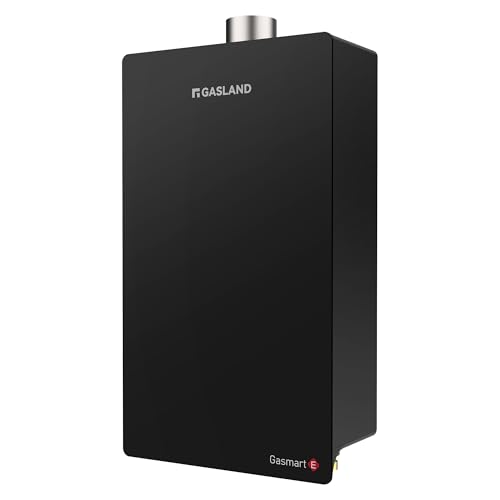
GASLAND Gasmart E provides whole-house hot water on demand with up to 7.6 GPM and 199,000 BTU. This indoor unit is designed to supply continuous hot water for multiple points—showers, laundry, and dishes—without the delays of a storage tank. Its compact, wall-mounted form fits into tight utility spaces, making it a strong choice for mid-sized homes or cabins where space is at a premium. The high heat output ensures adequate recovery even during busy mornings and peak usage periods.
Energy efficiency is highlighted by a UEF of 0.8, translating into lower energy use and reduced NOx emissions versus older tank systems. GASLAND emphasizes space-saving installation and consistent performance. Prospective buyers should verify venting requirements and ensure the gas supply matches the unit’s input. Regular maintenance and annual safety checks help sustain performance and prolong service life.
FOGATTI InstaGas Comfort 170 Series

FOGATTI InstaGas Comfort 170 Series delivers 170,000 BTU and up to 7.5 GPM, providing instant hot water for 3–5 outlets as water flows through. The four-stage combustion system and precision sensors support stable temperature control, with a ΔT near ±1℉, ensuring consistent comfort despite shifts in incoming water or ambient temperature. A compact footprint and indoor installation make it suitable for kitchens, baths, and laundry areas seeking high performance in a smaller space.
Beyond raw power, FOGATTI emphasizes quiet operation around 45 dB and efficient flame management for safe, efficient combustion. Installers should verify venting, clearance, and an adequate gas supply. Regular maintenance, including descaling in hard-water areas and periodic burner checks, helps sustain efficiency and prolong unit life.
Suburban Advantage SW6DE RV Tank Water Heater
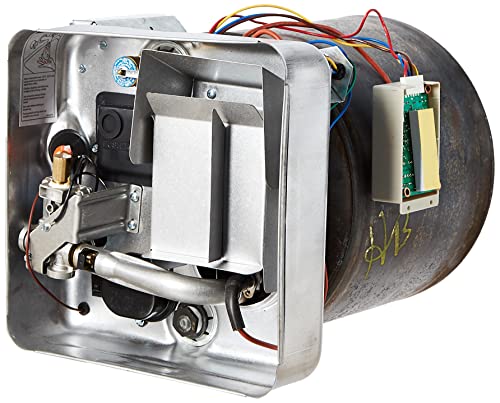
The Suburban Advantage SW6DE is a 6-gallon porcelain-lined steel RV tank water heater. The porcelain lining protects the tank and extends life, while a replaceable anode rod provides corrosion protection and doubles as a drain for easier maintenance. The unit offers flexible power options with an optional electric element, enabling heating from campsite or generator power when propane is not available. This tank-based design delivers dependable hot water for RVs, campers, and small cabins where a compact, portable solution is beneficial.
Installation considerations include proper venting and gas supply sizing, as well as ensuring the unit fits within the RV’s compartment. The replaceable anode rod improves longevity, and the drain port aids winterization and routine servicing. For travelers and remote setups, compatibility with standard fittings and straightforward installation are important, alongside ensuring safe venting and proper gas handling.
Buying Guide
Key purchase considerations
Choose a unit based on how much hot water your household typically needs at once. Flow rate is measured in GPM for tankless models, while tank-based heaters use gallons as capacity. Fuel type matters: natural gas is common, but propane may be necessary where gas lines aren’t available. Venting requirements differ by model and installation location, so plan for proper combustion air and exhaust paths. Energy efficiency (UEF) affects long-term operating costs, so compare efficiency ratings among contenders. Finally, consider warranty coverage and brand reputation for service and parts availability.
Tankless vs. Tank: pros and cons
- Tankless: endless hot water on demand, compact footprint, no standby heat loss, higher upfront cost, requires precise installation and venting.
- Tank: simpler installation, consistent hot water with a classic storage approach, bulkier footprint, standby heat loss, more forgiving when recovering from cold water in large households.
Sizing and installation tips
Estimate your peak demand: two bathrooms typically require around 6–8 GPM; smaller homes may manage with 3–6 GPM. For RVs, a 6-gallon tank often suffices for basic needs, but extended stays or multiple users benefit from larger tanks or dual-fuel options. Verify venting compatibility, gas supply pressure, and clearances from walls and combustibles. Consider professional installation to ensure safety and to meet local code requirements, especially for high-capacity or outdoor installations.
Maintenance and safety considerations
- Regular flushing to remove mineral buildup and maintain heat exchanger efficiency.
- Descale in hard-water regions; check anode rods on tanks and replace as needed.
- Inspect vent connections and gas lines for leaks; ensure proper clearance and combustion air.
- Schedule periodic professional inspections to preserve warranty and safe operation.