Best Flooring for a Music Studio: Acoustic Mats, Rugs and Vibration Dampening
Sound quality in a music studio starts at the floor. The right flooring can cut reverb, dampen instrument vibrations, and protect both your space and gear. This guide highlights five top flooring options that work for home studios, rehearsal rooms, and professional spaces alike. We compare interlocking acoustic mats and area rugs based on absorption, density, slip resistance, ease of installation, and overall durability. Each choice aims to minimize noise transfer to neighboring spaces while providing a comfortable surface for long practice sessions and studio work.
| Product | Brand | Key Feature | Dimensions |
|---|---|---|---|
| TroyStudio Interlocking Acoustic Floor Mats | TroyStudio | High absorption, NRC 0.87, interlocking, non-slip | 11” x 11” x 0.4” per tile; 16 tiles |
| Terukir Interlocking Floor Mats (Non-Black) | Terukir | Dense acoustic structure, 16 tiles, interlocking | 11.8” x 11.8” x 0.4” each |
| Terukir Interlocking Floor Mats (Black) | Terukir | Same dense absorption with color variant | 11.8” x 11.8” x 0.4” each |
| Cepere Area Rugs For Studio | Cepere | Large area rug with anti-slip backing | 71” x 106” (180 x 270 cm) |
| Aodyow Interlocking Floor Mats | Aodyow | High-density, vibration dampening, anti-slip | 11.8” x 11.8” x 0.4” each; 20 pieces |
TroyStudio Interlocking Acoustic Floor Mats

TroyStudio offers a modular solution designed for music spaces. Each tile measures 11 inches square with a thickness of 0.4 inches, and the set includes 16 panels. The surface is a 100% polyester fiber felt designed for robust sound absorption. The system’s interlocking edges create a flat, wrinkle-free floor that resists shifting during play. With a high density rating of 150 kg/m3 and a Noise Reduction Coefficient (NRC) of 0.87, these mats help lower reverb and echo, which is especially beneficial for small to medium rooms. In addition, the mats contribute to vibration dampening, supporting heavier gear like pianos and drums placed on them. They also offer slip resistance and a comfortable underfoot feel, making them suitable for longer practice sessions. Installation is straightforward—align and press the interlocks to cover the target area. For studio owners seeking a balance of acoustic performance and flooring protection, these tiles are a practical choice.
Terukir Interlocking Floor Mats (Non-Black)

Terukir’s 16-piece interlocking mats are designed to reinforce sound control in practice rooms. Each piece is 11.8 inches square and 0.4 inches thick, constructing a stable surface over hardwood or tile. The mats are made from dense polyester fiber felt, with a weight of about 0.24 lbs per panel, contributing to vibration dampening for drums and pianos while reducing reverberation. The interlocking design minimizes gaps and creases, which helps keep stands and pedals in place during intense sessions. Users benefit from a warmer, more intimate feel underfoot and improved floor protection against scratches and dents caused by heavy equipment. The non-slip surface enhances safety during energetic performances.
Terukir Interlocking Floor Mats (Black)
The black variant shares the same construction and acoustic performance as its non-black counterpart, with the same 11.8×11.8×0.4 inch tiles and 16-piece package. The color option offers a studio aesthetic that blends with darker furnishings and gear. The mats maintain their interlocking, seam-free surface, ensuring an uninterrupted platform for placing stands, drums, and digital pianos. In addition to vibration dampening and echo reduction, the product emphasizes a stable base and slip resistance, which helps minimize movement during vigorous playing. If you prefer a cohesive look in a music space, this variant provides similar acoustics with a different visual approach.
Cepere Area Rugs For Studio
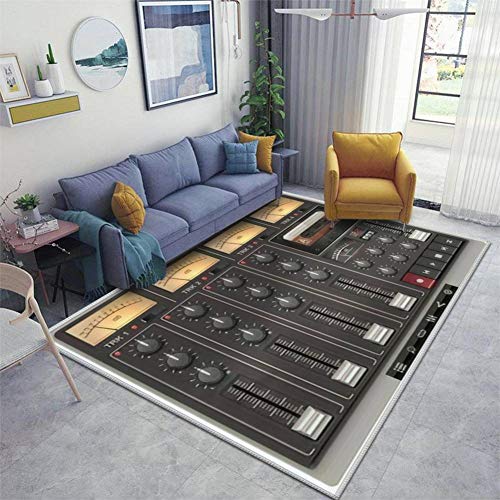
The Cepere rug offers a broad, low-pile surface ideal for large studio spaces. Sized at 71 by 106 inches, this rug provides expansive coverage that can anchor a drum throne, keyboard station, or recording area. Made from soft polyester, it delivers a comfortable walking surface and helps absorb footfall sounds. The anti-slip latex backing minimizes movement on hard floors, preventing shifting during intense sessions. Edge stitching reinforces durability and longevity, which is important for high-traffic studios or shared spaces. Its versatility also makes it suitable for living areas, as it blends aesthetics with functional acoustic benefits.
Aodyow Interlocking Floor Mats
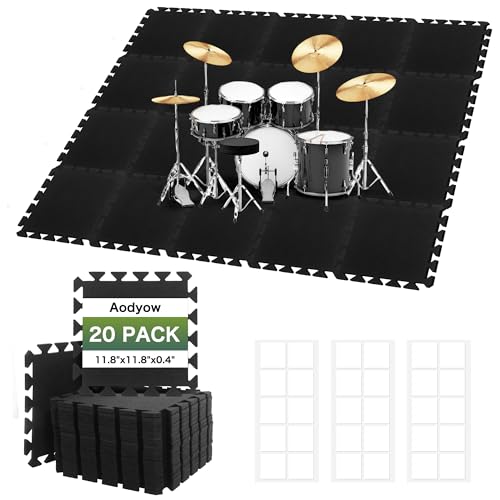
Aodyow’s 20-piece interlocking mat set is designed with a high-density felt structure to dampen sound and control vibration. Each tile measures 11.8 inches square and is 0.4 inches thick, with a weight of about 0.22 pounds per panel. The mats are made from polyester fiber felt with an acoustic density around 135 kg/m, which supports noise reduction and improved listening environments. The interlocking system creates a seamless surface that resists slipping and reduces the risk of movement during spirited performances. This configuration is well-suited for drummers, keyboard players, and room setups that require modular, scalable coverage. In addition to sound control, the mats help protect floors and furniture from impact damage.
Buying Guide
Choosing the right flooring for a music studio involves balancing acoustic goals with practical considerations. Here are key purchase considerations to help you decide between mats, area rugs, or a combination of both.
- Acoustic goals: If your primary objective is reducing room reverb and flutter echoes, prioritize higher-density mats with strong absorption metrics (look for NRC values around 0.8–0.9 and an elevated absorption coefficient). Interlocking mats provide consistent coverage, which matters for small to medium rooms. For larger spaces, a sizable area rug can absorb footfall noise and soften footsteps without requiring dense tile coverage.
- Coverage and space planning: Calculate the floor area you want to treat. Interlocking mats are scalable, modular, and easy to add as your studio grows. Large area rugs, while offering broad coverage, might leave edge areas untreated unless paired with mats, so consider a hybrid approach for balanced acoustics and comfort.
- Material and density: Mats typically use polyester fiber felt with high density to dampen both air-borne and structure-borne sound. Density values (kg/m3) approximate how well the mat resists vibration and how long it will hold up under heavy gear. Higher density generally means better vibration control but may impact price and weight.
- Safety and stability: Look for slip-resistant backings or non-slip surfaces, especially on hardwood or tile floors. Interlocking edges should form a seamless surface to reduce tripping hazards. For busy practice spaces, stability matters as stands and pedals can shift during play.
- Durability and maintenance: Consider how easy the material is to clean, stain-resistant, and resistant to wear from rolling hardware or drum sticks. Rugs may require periodic cleaning, while mats can be vacuumed or wiped down. Edge stitching and panel connections affect long-term durability.
- Installation and flexibility: Interlocking mats are quick to install and reposition. If you expect layout changes, modular mats offer greater flexibility than a fixed rug. Area rugs provide aesthetic benefits but may require careful placement to ensure non-slip backing remains effective on different floor types.
- Budget and value: Interlocking mats with high-density felt and strong acoustic performance often come with higher upfront costs but can reduce neighbor noise and protect floors, making them a cost-effective long-term investment for home studios and professional spaces alike.
- Aesthetics and room design: Color, texture, and surface appearance impact the studio’s vibe. Black mats blend with equipment and gear; neutral-toned mats and rugs can complement various decors while maintaining functional acoustics.
- Environmental and safety considerations: Look for materials that are low-VOC and safe for indoor use. Polyester felt mats are generally durable and easy to maintain, but always check for certifications if you have sensitive occupants or specific environmental requirements.
- Warranty and brand reliability: Choose products from reputable brands with clear warranty terms and responsive customer service. This can be especially important for modular systems that will be expanded over time.
In practice, many studios benefit from a hybrid approach: a floor of interlocking mats for dense absorption in the critical practice zones, complemented by area rugs to address broader room acoustics, visual appeal, and foot comfort. When choosing, assess your room size, the type of instruments you use, and how you want sound to travel through the space. Each product listed here offers distinct advantages—from high-density mats that dampen vibration to large area rugs that quietly tame footsteps—so you can tailor a floor strategy to your studio’s needs.