In this guide
Siphon coffee makers blend science and theater to produce bright, clean cups with pronounced aromatics. Electric siphon units simplify the brew process by stabilizing heat and timing, delivering consistent results with less guesswork. This guide evaluates five notable siphon devices—ranging from electric vacuum models to traditional stove-top and tabletop siphons—to help American buyers compare performance, capacity, and usability in real kitchen settings.
Below is a concise summary of the chosen products, highlighting type, capacity, and a standout feature. This table offers a quick reference as you read deeper into each detailed section.
| Product | Brand | Type | Capacity | Key Feature |
|---|---|---|---|---|
| Bodum 34oz ePebo Electric Vacuum Coffee Maker | Bodum | Electric Vacuum | 34 oz | Automated temperature control with BPA-free Tritan jug |
| Yama Glass 8-Cup Stovetop Siphon Coffee Maker | Yama Glass | Stovetop Siphon | 24 oz | Durable borosilicate glass; reusable cloth filter |
| Amarine 5-Cup Tabletop Siphon Coffee Maker | Amarine Made | Tabletop Siphon with Alcohol Burner | 16 oz (5 cups) | Alcohol burner for steady, continuous heat |
| Nispira Belgium Royal Family Balance Siphon | Nispira | Tabletop Vacuum Siphon | 500 ml | Balance siphon design with vacuum brewing |
| YUCHENGTECH Syphon Coffee Maker | YUCHENGTECH | Tabletop Glass Siphon | 3 cups (360 ml) | High-temp borosilicate glass; versatile heat-base compatibility |
Bodum 34oz Electric Vacuum Coffee Maker

The Bodum ePebo Electric Vacuum Coffee Maker employs an automated vacuum brewing process with precise temperature control. The heat-responsive system guides water through a glass funnel, while a BPA-free Tritan jug provides durability. This model emphasizes a clean, bright cup profile achieved through controlled extraction. Users benefit from a self-contained unit that handles heating, brewing, and filtration in one device, reducing manual steps in the process.
Construction relies on a heat-resistant glass funnel to visualize the brewing stages, from water movement to coffee saturation. The electric design helps maintain consistent temperatures during extraction, which supports steady flavor development. Cleaning options include disassembling glass components and rinsing the jug; care is advised to preserve seal integrity and to avoid damage to the glass chambers over time.
Yama Glass 8-Cup Stovetop Siphon Coffee Maker
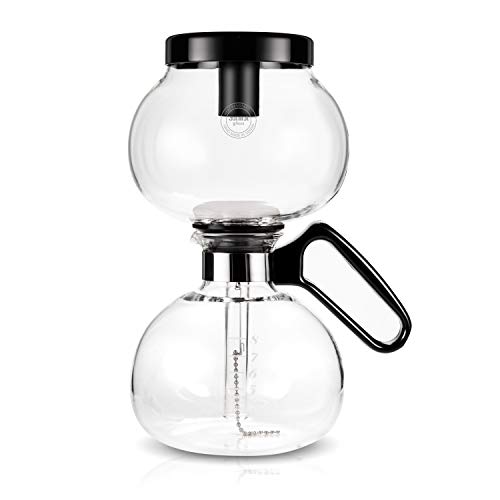
This Yama Glass siphon is designed for stovetop use and features a durable borosilicate glass construction. It includes a reusable cloth filter and a measuring spoon to support precise grind and dosage. The device relies on direct heat to move water between the lower and upper chambers, producing a clean and aromatic cup. The glass design offers a dramatic brewing process, enabling observers to witness the full cycle from boil to cup, while fabric filters help capture grounds without extra paper waste.
Users should plan on a stable heat source and careful handling of hot glassware. The lower vessel normally sits on a stove or burner, and the brewing cycle requires attention to flame height and timing. While not electric, this model remains a classic choice for those who appreciate the ritual and flavor profile of vacuum-brewed coffee, especially with a well-graded grind and even extraction.
Amarine 5-Cup Tabletop Siphon Coffee Maker

The Amarine Made siphon uses an alcohol burner to provide the heat source, delivering steady warmth during the extraction. The device is constructed with heat-resistant glass and polypropylene components for durability and reuse. Its 5-cup capacity makes it suitable for serving households or small gatherings. The alcohol burner design adds a theatrical element to the brew while maintaining control over the heat to influence flavor extraction.
Operation requires careful flame management and appropriate ventilation. The glass components allow visual monitoring of the brewing process, but users must handle hot parts with care. Cleaning involves rinsing the glass chambers and ensuring the burner remains free of spills to maintain consistent performance over time. This model is well-suited for those who enjoy a traditional siphon ritual with a visible, manual heat source.
Nispira Belgium Royal Family Balance Siphon

Nispira’s Balance Siphon employs a gravity-driven, vacuum-based brewing method with an emphasis on precision and visual appeal. The device uses a copper-toned aesthetic with glass and metal components to create a premium feel while delivering a complex flavor through balanced extraction. The 500 ml capacity sits between single-serve and small-family needs, offering multiple servings per brew. Heat is typically supplied via an external source, making it versatile for different kitchen setups.
Brewing with a balance siphon often preserves aromatic oils, contributing to a fuller aroma and body. The design encourages careful control of temperature and timing to maximize flavor. Cleaning requires attention to glass joints and metal fittings, ensuring the siphon remains free of residue. This model is appropriate for coffee enthusiasts who value both performance and a striking presentation in their brewing station.
YUCHENGTECH Syphon Coffee Maker

The YUCHENGTECH siphon pot combines borosilicate glass with a sturdy base designed for stability on a range of heating sources, including alcohol lamps and gas stoves. The device is rated for 3 cups (360 ml), making it a compact option for smaller households or solo brews. Its glass construction supports clarity during the brew, allowing users to observe the vapor movement and bloom before serving. The design emphasizes compatibility with various heat sources, enabling flexible kitchen setups.
As with other tabletop siphons, proper handling is essential to prevent cracking and to maintain filter integrity. The product includes a base that supports stability during heating, but users should ensure a flat, level surface and attentive flame control. This model appeals to those who want a compact, visually engaging siphon experience without committing to a larger electric system.
Buying Guide
When selecting a siphon coffee maker—electric or otherwise—consider how you plan to use it, your kitchen setup, and how much ritual you enjoy during brewing. The following considerations help buyers compare options across different heating methods, capacities, and materials.
- Heating method and energy use: Electric siphons simplify control and timing, delivering consistent heat. Stove-top and alcohol burner models offer a traditional experience and can work even when electricity is unavailable. Consider how often you’ll brew and where you’ll place the device in your kitchen.
- Capacity and serving needs: Siphons vary from 3 cups to 8 cups or more. Choose a size that fits your typical serving needs without leaving too much unused space in the vessel.
- Construction materials: Borosilicate glass is common for clear observation and thermal stability. Durable joints, quality seals, and a BPA-free jug can influence longevity and ease of use over time.
- Filtration and extraction: Cloth or metal filters affect the cup’s body and mouthfeel. A finer filtration can yield a cleaner cup with less sediment, while a coarser path may preserve more oils for fuller flavor.
- Heat source reliability and safety features: Electric models often include temperature control and auto shut-off. Non-electric siphons require careful flame management and ventilation, so user safety is crucial when choosing a setup.
- Ease of use and maintenance: Look for simple assembly, clear instructions, and components that are easy to clean. Removable glass parts should be handled carefully to avoid damage or cracking during cleaning.
- Design and aesthetics: Siphon coffee makers are as much display pieces as they are appliances. If presentation matters, consider how the unit looks on your countertop and whether the glass and metalwork suit your kitchen style.
- Price and value: Electric siphons typically command higher upfront costs due to integrated heating systems and controls. Weigh the cost against the benefits of consistent temperature control and convenience.
- Maintenance needs: Regularly inspect seals and filters. Some models require more frequent filter replacement or glass polishing to maintain clarity and performance over time.
In summary, your choice depends on how you prioritize control, theater, and convenience. Electric siphon coffee makers provide reliable heat management and automated timing, while traditional siphons favor a hands-on ritual and a visually engaging brew cycle. The five models reviewed here offer a spectrum of options to fit different kitchens, from compact, table-ready devices to larger, more feature-rich units.