Best Candle Wax Melter for Efficient DIY Candle Making
Choosing the right candle wax melter is essential for consistent texture and clean pours, whether you’re a hobbyist or running a small candle business. The following five selections emphasize practical capacity, reliable heat control, easy pouring, and safety features. Use the quick comparison table to narrow your options, then explore each product section for details that match your workflow and wax type needs.
| Product | Capacity | Key Benefit |
|---|---|---|
| Ksedcon 1.5L Wax Melter | 1.5L | Compact, quick melt with lid for safe handling |
| Aroparc 6 Qt Wax Melter | 6 Qt (~5.7 L) | Large batch capability with easy pour valve |
| TOAUTO 10 Lbs Wax Melter | 10 Lbs | Bulk production with adjustable temperature |
| KQU Wax Melting Pot With Thermometer | 1.5L | Thermometer for precise control, kid-safe design |
| Ksedcon Electric Wax Melting Pot (Orange) | 1.5L | Lid, spill-free pouring, easy grip |
Ksedcon 1.5L Wax Melter

The Ksedcon 1.5L wax melter is designed for small-batch candle making with a compact footprint that still delivers ample capacity. Featuring a 1.5-liter pot and a power range of 300-600W, it can melt a significant amount of wax in a relatively short time—often under 8 minutes when mixed properly with a stirring tool. A glass lid helps minimize spills and heat loss, while the pot’s non-stick surface simplifies cleanup after dipping into soy, paraffin, or beeswax blends. The pouring spout supports controlled, single-handed pouring, making it a practical choice for beginners and hobbyists alike.
Operational tips emphasize safe handling and consistent results: keep the wax stirred during heating to avoid overheating at the bottom, and use the lid to maintain steady temperatures. The design prioritizes ease of use, particularly for younger makers or those new to candle casting, with a focus on predictable melting and clean pours. This model pairs well with standard fragrance oils and colorants commonly used in small-batch candle making.
Aroparc 6 Qt Wax Melter
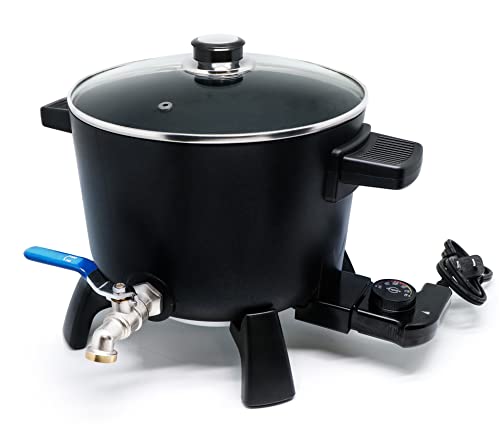
The Aroparc wax melter is built for higher-volume candle making, boasting a real 6-quart capacity that can melt up to 11 pounds of wax in one batch. Its standout feature is the stainless steel ball valve with a copper-core pour spout, designed to release wax smoothly with minimal effort. Fast heating means you’ll move from raw wax to ready-to-pour batches quickly, which is ideal for bulk orders or weekend craft sessions. The robust construction supports soy wax, paraffin, coconut wax blends, and beeswax, giving you versatility across projects.
In use, the pour system minimizes drag and ensures clean, even dispenses. The combination of a spacious pot and a reliable pour mechanism makes it easier to manage multiple molds without constant refills. This model favors makers who regularly produce larger runs while still aiming for a tidy workspace and consistent flame-free pours.
TOAUTO 10Lb Wax Melter

The TOAUTO 10-pound wax melter is designed for bulk candle production with a clear focus on efficient pouring and temperature control. It can handle up to 10 pounds of wax per cycle, making it suitable for professional or semi-professional kitchens and studios. A key feature is the adjustable temperature range from 86°F to 212°F, allowing you to tailor heat to different wax types, from soy to beeswax blends. The spout is positioned to promote smooth drainage, and the unit emphasizes easy cleanup with its accessible design, reducing downtime between batches.
Performance notes highlight rapid melting: about 15 minutes to fully melt a 5-pound batch of soy wax at the upper end of the range when used with a steady stirring rhythm. The intermittent mode helps maintain a stable temperature, preventing scorching and preserving scent integrity for your fragrances. This melter is well-suited for makers who process multiple orders in a production line setup.
KQU Wax Melting Pot With Thermometer

The KQU wax melting pot emphasizes precision with an integrated thermometer, helping crafters maintain steady temperatures for high-quality candles. The pot is designed for beginners and families, featuring a safety-first plasticized exterior that remains comfortable to touch during heating. It heats quickly with a power rating around 600W, enabling efficient melting of 1.5 liters of wax. The thermometer guidance helps you avoid overheating and ensures you hit target temperatures for common wax bases like soy, paraffin, and coconut blends.
Practical use notes include the fixed measurement spot for accurate readings and the straightforward control knob, which supports two main power levels. The combination of safety features, simple operation, and reliable heating makes this option a strong choice for hobbyists seeking predictable results without a steep learning curve.
Ksedcon Electric Wax Melting Pot (Orange)

This Ksedcon model mirrors its 1.5L sibling with a bold orange finish and a practical feature set designed for beginners and kitchen-style setups. It operates on 110V, delivering 300-600W for efficient wax melting while ensuring the unit remains cool to the touch during heat cycles. The glass lid shields the wax from contaminants and helps maintain steady temperatures, supporting clean pouring with less splatter. The design emphasizes ease of use and safety, making it a preferred option for new makers exploring candle production.
Overall, the combination of a manageable capacity, reliable heat range, and a sturdy pouring spout makes this melter suitable for small studios or home workshops that regularly work with soy and paraffin blends. The lid and protective features add a layer of peace of mind when handling hot wax during busy sessions.
Buying Guide
Capacity and Batch Size
Choose capacity based on your production goals. Small setups commonly use 1.5–3 L pots for hobbyists, while home businesses may opt for 6 Qt to 10 Lbs equivalents for bulk pours. Consider your typical batch size per candle and how many containers you plan to fill in a single session. A larger melter reduces refills but takes up more counter space and requires more careful temperature management.
Heat Power and Melting Speed
Wattage typically ranges from 300W to 600W in consumer models. Higher watts melt wax faster but can also introduce hotter spots if not stirred. If you frequently melt large quantities, prioritize reliable heat distribution and a design that supports consistent stirring. For intermittent, single-batch projects, a lower wattage with good insulation may suffice and save energy.
Temperature Control and Stability
Precise temperature control helps preserve fragrance and prevent scorching. Look for units with adjustable ranges (e.g., 86°F to 212°F) and features like automatic intermittent mode or built-in thermostats. A thermometer or digital display aids accuracy, especially when working with sensitive wax blends that require specific temperatures for pouring and curing.
Pouring Mechanism and Spouts
Pour spouts, ball valves, or straightforward spigots affect ease of use. A smooth, well-seated spout minimizes drips and enables one-handed pouring. Some designs include a pour spout integrated with a lid to reduce spills, while others rely on manual pouring from the pot rim. For large batches, a robust pour system reduces labor and improves consistency across multiple molds.
Safety Features and Build Quality
Look for heat-resistant handles, lids, and non-stick interiors for easier cleanup. A glass or heat-resistant lid can prevent splashes and maintain stable temperatures. A sturdy exterior helps with temperature management and reduces burn risk, particularly in busy workspaces or classrooms. Always verify that the unit uses safe electrical interfaces and includes clear operating instructions.
Material and Cleaning
Non-stick coatings and stainless steel interiors simplify cleanup after heavy use. Removable components, such as lids and spouts, facilitate washing and prevent wax buildup. Double-boiler-like designs can also offer more even heat distribution, which is helpful when melting fragile wax blends or adding additives.
Durability and Maintenance
Consider the long-term value: how the melter handles repeated heating cycles, how easy it is to replace parts, and whether the manufacturer offers support or a warranty. Durable pots with reliable seals and accessible replacement parts generally perform better in busy crafting environments.
Workflow and Space
Measure your workspace and choose a unit that fits without crowding your setup. If you need mobility, consider models with compact footprints or removable pots you can relocate. For studio spaces, a larger-capacity melter paired with a secondary smaller pot can support a multi-stage workflow: melt, hold, and pour as separate steps to maximize efficiency.
Cost versus Value
Balance your upfront cost with the expected production gains. Higher-capacity, feature-rich melters may have a higher price tag but can reduce time and waste in larger operations. For hobbyists, a more affordable unit with essential controls may provide the best return on investment while still delivering quality results.