In this guide
- DAP Weldwood Floor Tile Adhesive
- DAP Multi-Purpose Floor Adhesive
- Fix-A-Floor Squeezy All-in-One Repair Adhesive
- Roberts Universal Resilient Flooring Adhesive
- Fix-A-Floor Tile Repair Adhesive – Extra Strength
- Buying Guide
- Adhesive Type And Subfloor Compatibility
- Bond Strength, Flexibility, And Curing Time
- Installation Method And Maintenance
- Environmental Considerations And Safety
Selecting the right adhesive is essential for reliable linoleum flooring installations and repairs. The following options focus on interior tile bonds, repair adhesives, and resilient flooring systems, offering a range of bond strengths and substrate compatibility. Each choice has distinct advantages for different linoleum setups—from new tile installations to quick fixes for loose floors. Use this guide to compare application methods, bonding performance, and substrate compatibility to determine the best match for your project.
| Product | Brand | Best For / Surface | Adhesive Type |
|---|---|---|---|
| DAP Weldwood Floor Tile Adhesive | DAP | Interior floor tile installations | Latex-based, pressure-sensitive |
| DAP Multi-Purpose Floor Adhesive | DAP | General flooring projects | All-purpose adhesive |
| Fix-A-Floor Squeezy All-in-One Repair Adhesive | Fix-A-Floor | Loose, hollow, or creaky floors (tiles, LVT, LVP, laminate) | Liquid repair adhesive |
| Roberts Universal Resilient Flooring Adhesive | ROBERTS | LVT, LVP, VCT, vinyl-backed carpet tile | Acrylic latex, solvent-free |
| Fix-A-Floor Tile Repair Adhesive – Extra Strength | Fix-A-Floor | Tile, marble, stone, wood repairs | Extra-strength adhesive |
DAP Weldwood Floor Tile Adhesive
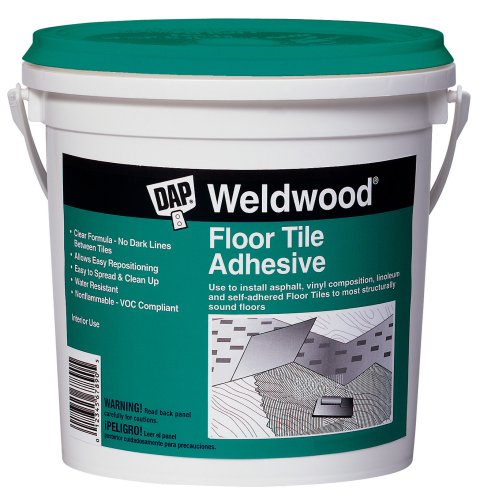
This product is a latex-based pressure-sensitive adhesive designed for interior floor tile applications. It supports easy repositioning after initial placement and dries clear, leaving no dark residue behind. Its formulation is suited for bonding tile surfaces commonly used with linoleum flooring systems, helping to secure tile while allowing adjustments during installation. The adhesive is typically used on clean, dry substrates to provide a reliable bond for tile-backed linoleum installations.
- Latex-based pressure sensitive adhesive for interior floor tile
- Allows easy repositioning after initial placement
- Transparent; leaves no dark residue
DAP Multi-Purpose Floor Adhesive
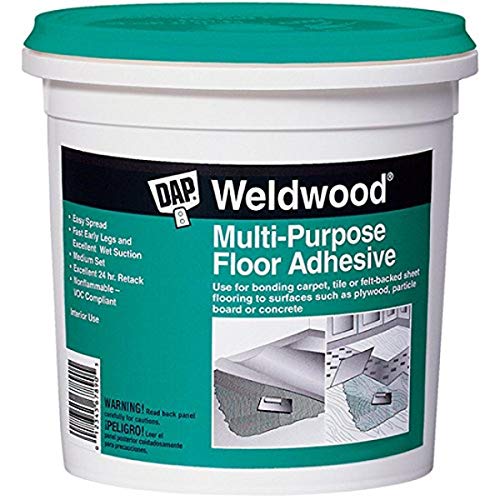
Designed as a general-purpose flooring adhesive, this product suits a variety of flooring projects beyond linoleum, including tile and vinyl installations. The product description emphasizes practical project tips, such as thinking ahead and understanding permit requirements, which can help during larger linoleum tile or repair jobs. Its versatility makes it a practical option for homeowners tackling mixed-surface renovations where linoleum is part of a larger flooring plan.
- General-purpose floor adhesive
- Tips for a good project: Think ahead; Permits are important
Fix-A-Floor Squeezy All-in-One Repair Adhesive

This repair adhesive is formulated for loose, hollow, or creaky floors and is designed for a drill-and-fill workflow. It works across multiple substrates, including ceramic, porcelain, marble, stone, wood, laminate, LVT, LVP, and vinyl plank, making it a versatile option for linoleum projects that require additional repair along with bond enhancement. The low-viscosity formula self-levels before curing and is designed to form a strong bond that accommodates underfloor heating systems in some configurations.
- Drill-and-fill application with a precision tip
- Widely compatible with ceramic, porcelain, marble, stone, wood, laminate, LVT, LVP
- Extra-strong, self-leveling formula suitable for underfloor heating systems
Roberts Universal Resilient Flooring Adhesive

This adhesive uses acrylic latex and is solvent-free, providing high initial strength with an environmentally friendly profile. It is optimized for resilient flooring types such as luxury vinyl tile (LVT), luxury vinyl plank (LVP), vinyl composition tile (VCT), vinyl sheet goods, and vinyl-backed carpet tile. It bonds well with prepared concrete, plywood, steel, marble, terrazzo, and other solid substrates but note it is not recommended for radiant heated subfloors above a certain temperature, which is specified by the manufacturer for safety and performance.
- Acrylic latex, solvent-free
- Ideal for LVT, LVP, VCT, vinyl sheet goods, and vinyl-backed carpet tile
- Bonds with concrete, plywood, steel, marble, terrazzo; radiant heat limitations
Fix-A-Floor Tile Repair Adhesive – Extra Strength

This extra-strength adhesive is designed to re-bond loose and hollow tiles, marble, stone, and creaky wood floors effectively. It is described as universally compatible with all subfloor materials, making it a flexible option for a range of linoleum repair scenarios. The product is DIY-friendly and comes with a syringe applicator to simplify the repair process, reducing the need for additional tools while delivering a strong, durable bond.
- Extra-strength formula for re-bonding tiles and creaky floors
- Universal substrate compatibility
- DIY-friendly; syringe applicator included
Buying Guide
When choosing an adhesive for linoleum flooring, consider substrate compatibility, bond strength, and comfort with the installation method. Linoleum surfaces often ride on concrete, plywood, or existing vinyl underlayment, so selecting an adhesive that works well with these substrates is critical. Liquid, latex-based adhesives typically offer repositionability and strong initial grabs, while solvent-free options may improve indoor air quality and reduce odor during curing. For repairs, repair-specific adhesives provide targeted performance for loose tiles, hollow areas, or squeaks, sometimes with special additives to promote self-leveling and underfloor heating compatibility.
Adhesive Type And Subfloor Compatibility
Match the adhesive type to the subfloor and the linoleum product. For new tile installations on concrete or plywood, a latex-based or acrylic latex adhesive with good early grab is common. For resilient linoleum setups or vinyl-backed sheets, a versatile adhesive designed for vinyl-backed materials can deliver reliable bonds. If you anticipate future tile maintenance or adjustments, choose a repositionable formula that allows minor shifts after placement before curing.
Bond Strength, Flexibility, And Curing Time
Bond strength should be sufficient to prevent tile lift under normal foot traffic while maintaining some flexibility to accommodate substrate movement. Look for adhesives that cure at a moderate pace to reduce the risk of cracking. Some products are formulated for underfloor heating and offer elastomeric properties that tolerate temperature fluctuations without losing adhesion.
Installation Method And Maintenance
Consider whether you prefer a traditional liquid adhesive with a spreadable consistency or a specialized repair adhesive with built-in syringe or precision nozzle. Drain time, cleanup requirements, and odor are practical factors in home installations. For large projects, read manufacturer guidelines on open time, set time, and clean-up solvents to minimize downtime and ensure a clean transition between rows of linoleum tiles.
Environmental Considerations And Safety
Solvent-free, low-VOC formulations are preferable for indoor air quality, especially in living spaces. Check product data sheets for compatibility with radiant heat systems and any subfloor restrictions. For households with children or pets, prioritize non-toxic, low-odor options and ensure proper ventilation during installation and curing.